mains · Eggs
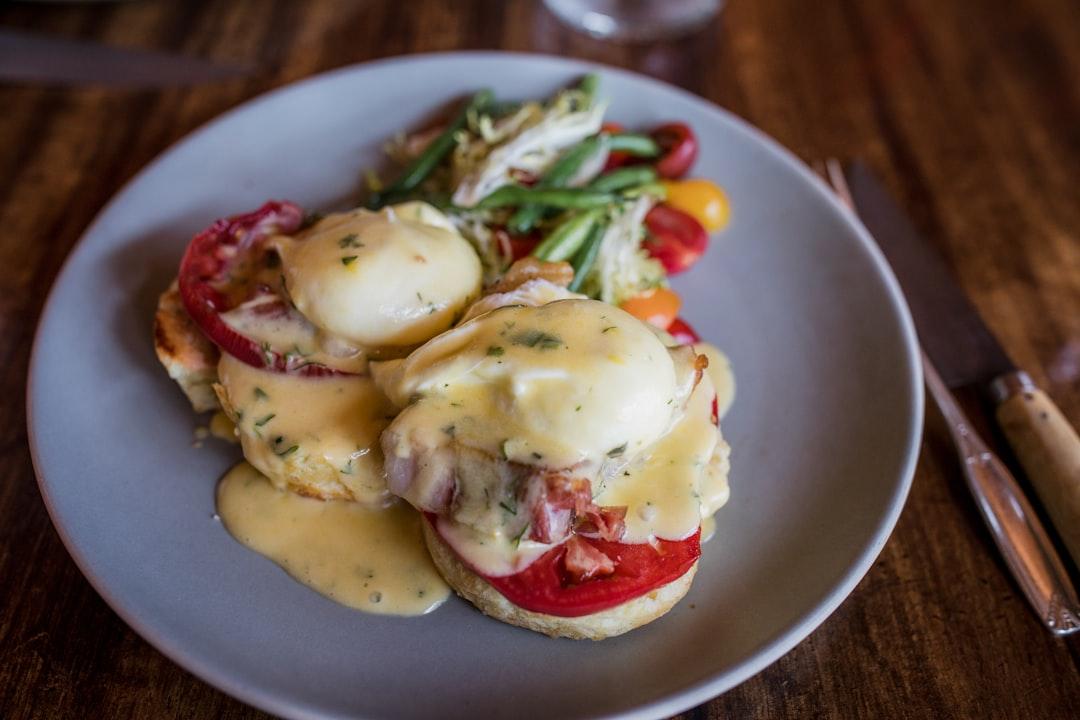
Eggs Benedict with Hollandaise
A classic brunch dish — poached eggs, Canadian bacon, and hollandaise on English muffins. A composed plate that tests your timing and multitasking.
Nutrition (per serving)
520
Calories
24g
Protein
26g
Carbs
36g
Fat
1g
Fiber
Ingredients
The ultimate brunch dish — poached eggs, Canadian bacon, and hollandaise on English muffins. A composed plate that tests your timing and multitasking.
Method
-
Make the hollandaise first (it holds for 30 minutes): Whisk egg yolks and lemon juice in a heatproof bowl set over a pot of barely simmering water (the bowl should not touch the water). Whisk constantly until the yolks thicken and you can see the bottom of the bowl between strokes, about 3 minutes.
-
Remove bowl from heat. Very slowly drizzle in the melted butter while whisking constantly — start with drops, then a thin stream. If you add butter too fast, the sauce will break. Season with cayenne and salt. Cover and keep warm (not hot).
-
Poach the eggs: Bring a wide, deep pan of water to a gentle simmer (180°F — tiny bubbles, no rolling boil). Add vinegar. Create a gentle whirlpool with a spoon.
-
Crack each egg into a small cup first, then gently slide it into the water. Cook 3-4 minutes for a runny yolk. Remove with a slotted spoon and drain on a paper towel.
-
While eggs poach, warm the Canadian bacon in a skillet over medium heat, about 1 minute per side. Toast the English muffins.
-
Assemble: muffin half → Canadian bacon → poached egg → generous spoonful of hollandaise. Garnish with chives and a dusting of paprika. Serve immediately.
Equipment
- Stainless steel skillet Recommended: Tramontina 12-Inch Tri-Ply Clad Stainless Steel Fry Pan
- Cutting board Recommended: John Boos Maple Edge-Grain Cutting Board 18x12
- Mixing bowls Recommended: Vollrath Stainless Steel Mixing Bowls Set
Chef Notes
- The most important thing: Pull at 140°F internal — it carries over to 145°F during rest. The old 160°F rule is outdated and produces dry pork.
- The liquid should barely simmer — small bubbles around the edges, not a rolling boil. Aggressive boiling toughens delicate proteins.
- This comes together in 30 minutes — have everything prepped before you start cooking. Speed is the technique here.
- Taste as you go and adjust seasoning at the end. Salt levels change as liquids reduce and flavors concentrate.
Common Substitutions
| Ingredient | Substitution | Notes |
|---|---|---|
| Bacon | Pancetta or turkey bacon | Pancetta is unsmoked. Turkey bacon is leaner. |
| Butter | Ghee or olive oil | Ghee for similar richness. Olive oil for dairy-free. |
| Lemon juice | Lime juice or white wine vinegar | Lime is slightly sweeter. Vinegar for pure acidity. |
| Mayonnaise | Greek yogurt or avocado | Yogurt is tangier. Mashed avocado for richness. |
| Paprika | Ancho chili powder or cayenne (use ¼ amount) | Ancho is smoky-sweet. Cayenne is much hotter. |
What You're Practicing
Hollandaise sauce: This is one of the five French mother sauces (covered in Foundations). The technique — emulsifying melted butter into egg yolks — is the same principle as mayonnaise but served warm. The key is temperature: too hot and the yolks scramble, too cool and the butter solidifies. Keep the water at a bare simmer.
Poaching eggs: Fresh eggs poach best because the whites are tighter and cling to the yolk. As eggs age, the whites become watery and spread in the water. The vinegar helps the whites coagulate faster. The whirlpool wraps the white around the yolk.
Timing and multitasking: Eggs Benedict is a timing exercise. The hollandaise must be made first (it holds). The eggs must be poached last (they don't hold). The bacon and muffins happen in between. Planning the sequence — what can wait and what can't — is how professional kitchens operate.
If the hollandaise breaks: If the sauce separates into a greasy mess, start a new yolk in a clean bowl with a teaspoon of water. Slowly whisk the broken sauce into the new yolk — it will re-emulsify. This rescue technique works for any broken emulsion.
Some equipment and ingredient links are affiliate links. We earn a small commission at no extra cost to you. Learn more
Comments (0)
Sign in to commentNo comments yet. Be the first to share your thoughts.
Frequently Asked Questions
- Can I make Eggs Benedict with Hollandaise ahead of time?
- Yes — prep the components up to a day ahead and store covered in the refrigerator. Reheat gently or bring to room temperature before serving.
- How do I store leftover Eggs Benedict with Hollandaise?
- Store in an airtight container in the refrigerator for 3-4 days. Reheat gently over medium-low heat, adding a splash of broth or water to prevent drying out.
- Can I freeze Eggs Benedict with Hollandaise?
- Yes — most cooked mains freeze well for up to 3 months. Cool completely, store in freezer-safe containers, and thaw overnight in the refrigerator before reheating.
- How many servings does this recipe make?
- This recipe serves 4. You can scale the ingredients up or down proportionally — use the Meal Plan servings slider to adjust the grocery list automatically.
- Is Eggs Benedict with Hollandaise a quick recipe?
- Yes — this recipe is ready in 30 minutes including prep time, making it perfect for busy weeknights.
- Is Eggs Benedict with Hollandaise gluten free and high protein?
- Yes — this recipe is gluten free and high protein. Check the Common Substitutions section for additional dietary adaptations.
- What substitutions can I make for Eggs Benedict with Hollandaise?
- See the Common Substitutions section above for ingredient and equipment swaps with specific trade-off notes for each alternative.
You Might Also Like

Bacalhau à Brás (Portuguese Salt Cod)
Shredded salt cod with crispy potatoes, scrambled eggs, and olives — Portugal's beloved comfort dish.
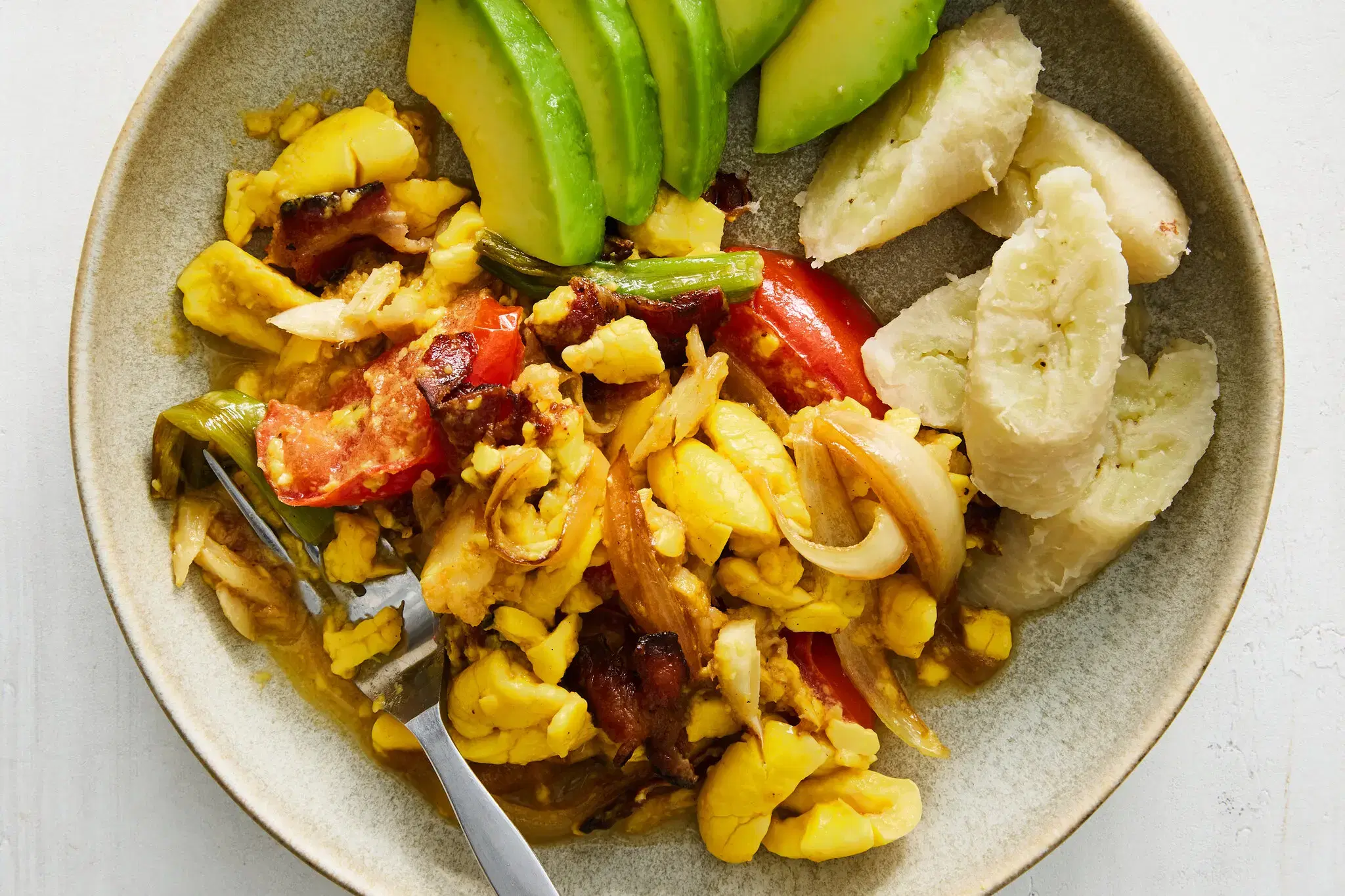
Ackee and Saltfish
Jamaica''s national dish — creamy ackee fruit sautéed with salted cod.

American BBQ Ribs (Oven-to-Grill)
Fall-off-the-bone pork ribs with a spice rub and sticky BBQ glaze — no smoker required.

Argentine Steak with Chimichurri
Grilled ribeye with Argentina's iconic chimichurri — raw herb sauce with red wine vinegar and garlic.