vegetables · roasted
Miso Butter Roasted Sweet Potatoes
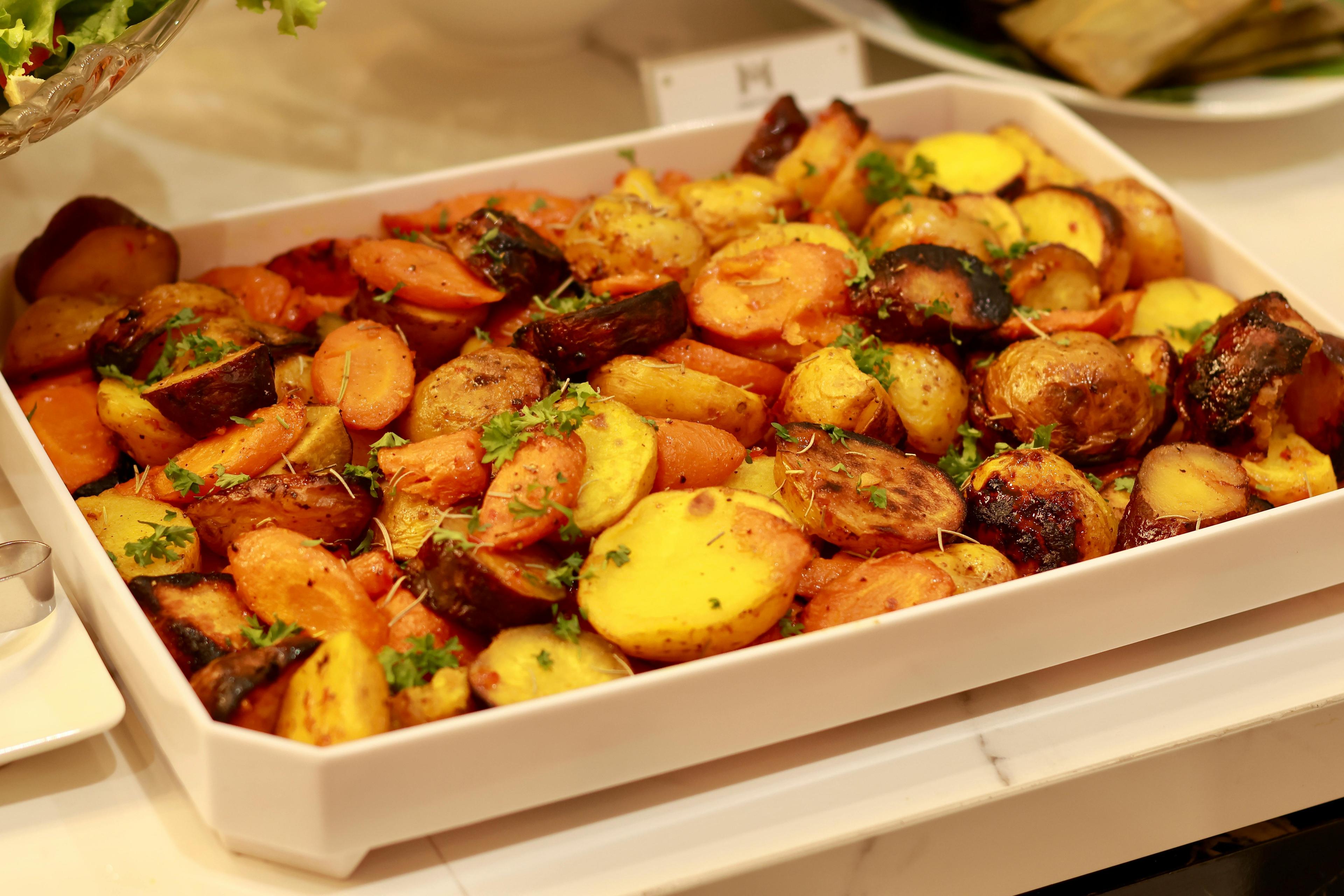
Roasted sweet potatoes glazed with miso butter and sesame. A Japanese-inspired side that caramelizes in 40 minutes.
Nutrition (per serving)
215
Calories
4g
Protein
32g
Carbs
9g
Fat
5g
Fiber
Ingredients
Method
-
Preheat the oven to 425°F and line a rimmed sheet pan with parchment paper. High heat is essential for sweet potatoes — it caramelizes the natural sugars on the surface while the interior steams to a creamy consistency. Lower temperatures produce soft but pale, uninteresting results.
-
Make the miso butter glaze by whisking together the melted butter, miso paste, maple syrup, neutral oil, and rice vinegar in a large bowl until smooth. The miso won't dissolve completely — small bits are fine and will melt during roasting. This glaze combines fat (butter), umami (miso), sweetness (maple), and acid (vinegar) — all four flavor dimensions in one sauce.
-
Toss the sweet potato wedges in the miso butter glaze until every piece is evenly coated. Arrange in a single layer on the prepared sheet pan with space between pieces. Overcrowding is the most common roasting mistake — pieces touching each other steam instead of roast, producing soft, pale results instead of crispy, caramelized ones.
-
Roast for 20 minutes, then flip each wedge with a spatula. The bottoms should be deeply golden and caramelized where the miso glaze has concentrated. The Maillard reaction between the miso's amino acids and the sweet potato's sugars creates a complex, savory-sweet crust that neither ingredient produces alone.
-
Roast for another 15-20 minutes until the wedges are tender when pierced with a knife and the edges are deeply caramelized — almost charred in spots. The miso glaze should look lacquered and glossy. Don't be afraid of dark spots — that's where the best flavor is.
-
Drizzle with sesame oil immediately out of the oven, then sprinkle with toasted sesame seeds, sliced scallions, and flaky sea salt. The sesame oil adds a nutty aroma that blooms in the residual heat. Serve warm alongside any Japanese main — teriyaki, tonkatsu, or grilled fish — or as part of a grain bowl.
Equipment
- Rimmed sheet pan Recommended: Nordic Ware Natural Aluminum Half Sheet Pan
- Mixing bowls Recommended: Vollrath Stainless Steel Mixing Bowls Set
- Parchment paper Recommended: Reynolds Kitchens Parchment Paper Roll
Chef Notes
- The most important thing: Mix the miso butter glaze and toss it with the sweet potatoes before roasting — not after. The miso caramelizes in the oven, creating a savory-sweet crust that you can't replicate by drizzling it on at the end.
- White miso (shiro miso) is mild and sweet. Red miso works but is saltier and more intense — use 1.5 tbsp instead of 2 if substituting.
- Cut the wedges to a uniform thickness so they cook evenly. Thin wedges burn before thick ones are tender.
- The maple syrup isn't for sweetness — it helps the miso glaze caramelize and creates a lacquered finish on the surface.
- These are best served warm, not hot. The flavors are more distinct at warm-to-room temperature.
Common Substitutions
| Ingredient | Substitution | Notes |
|---|---|---|
| White miso | Red miso (1.5 tbsp) | Stronger, saltier — reduce amount and skip the salt |
| Maple syrup | Honey | Slightly different flavor but same caramelization effect |
| Sweet potatoes | Butternut squash wedges | Similar sweetness, slightly different texture — add 5 min to cook time |
| Butter | Coconut oil | Makes it vegan; adds subtle coconut flavor that pairs well with miso |
| Sesame seeds | Furikake | Adds nori and bonito flavor — more traditionally Japanese |
What You're Practicing
This recipe teaches the technique of building a compound glaze — combining fat, umami, sweetness, and acid into a single coating that transforms during roasting. The same approach applies to any roasted vegetable: mix your glaze, coat the vegetables, and let the oven do the work. The miso-butter combination specifically demonstrates how fermented ingredients (miso) interact with heat to create flavors that fresh ingredients can't produce. Visit Compound Butters for more on flavored fat techniques.
The roasting fundamentals here — high heat, single layer, space between pieces, flip once — are universal. Every roasted vegetable, from Brussels sprouts to cauliflower to carrots, follows these same rules. Master them with sweet potatoes and you've mastered them for everything. Visit Techniques for the complete roasting guide.
Some equipment and ingredient links are affiliate links. We earn a small commission at no extra cost to you. Learn more
Comments (0)
Sign in to commentNo comments yet. Be the first to share your thoughts.
Frequently Asked Questions
- Can I make Miso Butter Roasted Sweet Potatoes ahead of time?
- Yes — prep the components up to a day ahead and store covered in the refrigerator. Reheat gently or bring to room temperature before serving.
- How do I store leftover Miso Butter Roasted Sweet Potatoes?
- Store in an airtight container in the refrigerator for 3-4 days. Reheat in a skillet over medium heat to restore texture — microwaving makes vegetables soggy.
- Can I freeze Miso Butter Roasted Sweet Potatoes?
- Cooked vegetables can be frozen for up to 3 months, though texture may soften. Roasted vegetables hold up better than steamed or sautéed.
- How many servings does this recipe make?
- This recipe serves 4. You can scale the ingredients up or down proportionally — use the Meal Plan servings slider to adjust the grocery list automatically.
- Is Miso Butter Roasted Sweet Potatoes vegetarian and gluten free?
- Yes — this recipe is vegetarian and gluten free. Check the Common Substitutions section for additional dietary adaptations.
- Is this an authentic Japanese recipe?
- This recipe follows traditional Japanese techniques and ingredients. The Chef Notes section explains any adaptations for home kitchen accessibility and suggests authentic alternatives where substitutions are made.
- What substitutions can I make for Miso Butter Roasted Sweet Potatoes?
- See the Common Substitutions section above for ingredient and equipment swaps with specific trade-off notes for each alternative.
You Might Also Like

Agurkesalat (Scandinavian Pickled Cucumber Salad)
Scandinavian pickled cucumber salad with dill and white vinegar. A 15-minute Nordic side for salmon and meatballs.

Aloo Gobi (Indian Potato and Cauliflower)
Aloo gobi — North India's beloved dry curry with potatoes, cauliflower, turmeric, and cumin.

Baba Ganoush
Baba ganoush — smoky charred eggplant dip with tahini, lemon, and garlic, served with warm pita.

Creamed Spinach
Wilted spinach in a rich béchamel with garlic and nutmeg — the classic steakhouse side dish.