mains · pork
Okonomiyaki (Japanese Savory Pancake)
Osaka-style cabbage pancake with pork belly, topped with okonomiyaki sauce, mayo, and bonito flakes.

Nutrition (per serving)
420
Calories
22g
Protein
38g
Carbs
20g
Fat
3g
Fiber
Ingredients
For the batter:
For the topping:
Method
-
Make the batter by whisking flour, dashi, eggs, and salt until smooth. Gently fold in the shredded cabbage, scallions, tenkasu, and pickled ginger. The mixture should be mostly cabbage with just enough batter to hold it together. Don't compress it — keep it light and airy.
-
Heat the skillet over medium heat with 1 tbsp oil. Pour half the batter mixture into the pan and gently shape into a round, about 3/4 inch thick. Don't press it down — you want it fluffy, not dense.
-
Lay pork belly slices on top of the raw batter in a single layer. The pork will cook when you flip the pancake, crisping directly against the hot surface.
-
Cook for 4-5 minutes until the bottom is golden brown and the edges are set. The pancake should hold together when you slide a spatula underneath.
-
Flip carefully using a wide spatula (or two spatulas). The pork belly is now on the bottom, crisping in the pan. Cook for another 4-5 minutes until the pork is crispy and the pancake is cooked through. Press gently with the spatula — you want it cooked through but not compressed.
-
Top generously — this is where okonomiyaki comes alive. Brush okonomiyaki sauce over the top. Zigzag Kewpie mayo across the sauce. Shower with bonito flakes (they'll dance and wave from the heat — this is the signature visual). Sprinkle aonori over everything.
-
Serve immediately on a plate or cutting board, cut into wedges. In Osaka, okonomiyaki is cooked on a teppan (flat griddle) at the table and eaten directly from the hot surface. The name means "grilled as you like it" — toppings and fillings are endlessly customizable.
Equipment
- Large nonstick skillet or griddle Recommended: All-Clad HA1 Expert Hard Anodized Nonstick Frying Pan
- Spatula (wide, flat) Recommended: GIR Ultimate Silicone Spatula
- Nonstick skillet Recommended: All-Clad HA1 Expert Hard Anodized Nonstick Frying Pan
- Grill or grill pan Recommended: Lodge Pre-Seasoned Cast Iron Grill Pan
- Tongs Also good: Wok Spatula
- Whisk Recommended: OXO Good Grips 11-Inch Balloon Whisk
Chef Notes
- The most important thing: Don't overmix the batter. Fold the cabbage in gently — the cabbage should be the star, not the batter. A good okonomiyaki is mostly cabbage held together by a thin batter, not a thick pancake with cabbage mixed in.
- Use dashi in the batter instead of water. The umami from the dashi makes the pancake taste savory and complex. Even instant dashi powder dissolved in water makes a noticeable difference.
- Tenkasu (tempura scraps) add crunch and richness to the batter. If you can't find them, crushed rice crackers or even crushed potato chips work as a substitute.
- The pork belly goes on TOP of the pancake, not mixed in. Lay the slices on the raw batter side before flipping — they crisp directly against the hot pan.
- The toppings are non-negotiable: okonomiyaki sauce, mayo, bonito flakes, and aonori. The dancing bonito flakes (they move from the heat) are the signature visual of okonomiyaki.
Common Substitutions
| Ingredient | Substitution | Notes |
|---|---|---|
| Pork belly | Shrimp, squid, or bacon | All traditional variations — bacon is the easiest swap |
| Okonomiyaki sauce | Worcestershire + ketchup + soy sauce + sugar | Mix 2:1:1:0.5 ratio — close approximation |
| Kewpie mayo | Regular mayo + pinch of MSG | Kewpie is richer and tangier — MSG bridges the gap |
| Bonito flakes | Omit (no substitute) | The dancing flakes are iconic but the dish works without them |
| Tenkasu | Crushed rice crackers or panko | Adds crunch — panko is the easiest to find |
| Dashi | Chicken broth | Different umami profile but adds savory depth |
What You're Practicing
Okonomiyaki teaches you the Japanese approach to savory pancakes — using a minimal batter to bind a large volume of vegetables. This ratio (mostly filling, minimal batter) is the opposite of Western pancakes and creates a lighter, more vegetable-forward result. The same approach appears in Korean pajeon, Chinese scallion pancakes, and French socca. Visit Techniques for more on savory pancake construction.
The layered topping technique (sauce → mayo → bonito → seaweed) teaches you about building flavor in layers on a finished dish. Each topping adds a different element: sweet-savory sauce, creamy richness, smoky umami, and oceanic depth. This same layered finishing approach appears in Mexican street corn (elote), Japanese takoyaki, and loaded fries.
Video Resources
Some equipment and ingredient links are affiliate links. We earn a small commission at no extra cost to you. Learn more
Comments (0)
Sign in to commentNo comments yet. Be the first to share your thoughts.
Frequently Asked Questions
- Can I make Okonomiyaki (Japanese Savory Pancake) ahead of time?
- Yes — prep the components up to a day ahead and store covered in the refrigerator. Reheat gently or bring to room temperature before serving.
- How do I store leftover Okonomiyaki (Japanese Savory Pancake)?
- Store in an airtight container in the refrigerator for 3-4 days. Reheat gently over medium-low heat, adding a splash of broth or water to prevent drying out.
- Can I freeze Okonomiyaki (Japanese Savory Pancake)?
- Yes — most cooked mains freeze well for up to 3 months. Cool completely, store in freezer-safe containers, and thaw overnight in the refrigerator before reheating.
- How many servings does this recipe make?
- This recipe serves 2. You can scale the ingredients up or down proportionally — use the Meal Plan servings slider to adjust the grocery list automatically.
- Is Okonomiyaki (Japanese Savory Pancake) a quick recipe?
- Yes — this recipe is ready in 25 minutes including prep time, making it perfect for busy weeknights.
- Is Okonomiyaki (Japanese Savory Pancake) dairy free and high protein?
- Yes — this recipe is dairy free and high protein. Check the Common Substitutions section for additional dietary adaptations.
- Is this an authentic Japanese recipe?
- This recipe follows traditional Japanese techniques and ingredients. The Chef Notes section explains any adaptations for home kitchen accessibility and suggests authentic alternatives where substitutions are made.
- What substitutions can I make for Okonomiyaki (Japanese Savory Pancake)?
- See the Common Substitutions section above for ingredient and equipment swaps with specific trade-off notes for each alternative.
You Might Also Like
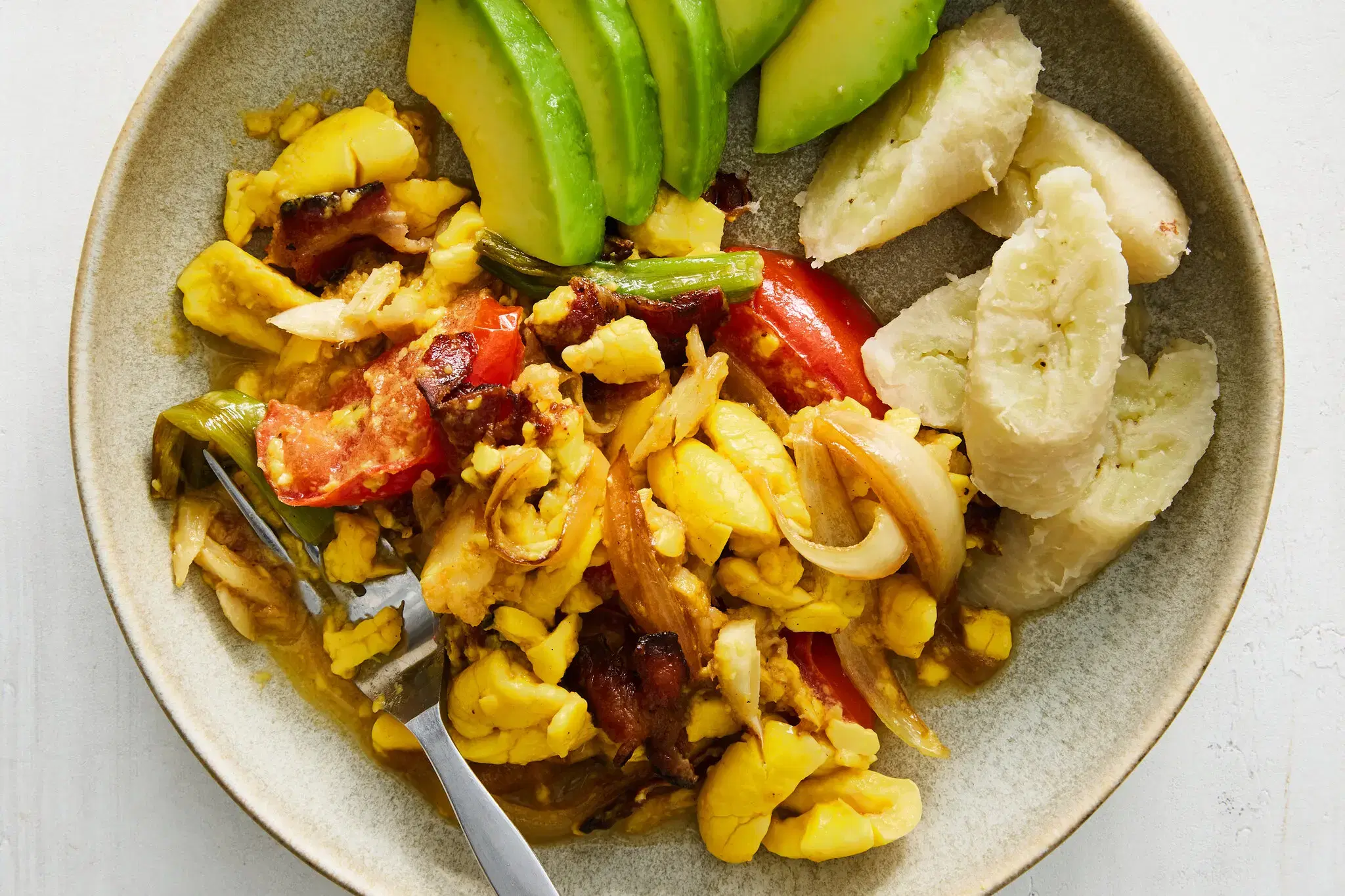
Ackee and Saltfish
Jamaica''s national dish — creamy ackee fruit sautéed with salted cod.

Bacalhau à Brás (Portuguese Salt Cod)
Shredded salt cod with crispy potatoes, scrambled eggs, and olives — Portugal's beloved comfort dish.
Baja-Style Fish Tacos (Tilapia)
Baja-Style Fish Tacos (Tilapia) — a Mexican main dish Ready in 30 minutes. Perfect for weeknight cooking. Quick and easy.

Baked Cod with Lemon and Dill
Baked cod with lemon, garlic, and fresh dill — light, flaky, and ready in 20 minutes.