mains · pork
BBQ Baby Back Ribs (Oven)
BBQ baby back ribs slow-roasted in foil until fall-off-the-bone tender, finished with sticky glaze.

Nutrition (per serving)
520
Calories
38g
Protein
18g
Carbs
32g
Fat
1g
Fiber
Ingredients
For the dry rub:
For the ribs:
For the glaze:
Method
-
Remove the membrane from the bone side of each rack. Slide a butter knife under the membrane at one end to loosen it, then grip the edge with a paper towel (it's slippery) and peel it off in one piece. This membrane is made of elastin, a protein that doesn't break down with heat the way collagen does. Leaving it on means tough, chewy ribs no matter how long you cook them.
-
Mix the dry rub and apply generously to both sides of each rack, pressing it into the meat. The brown sugar will help form a caramelized bark during cooking, while the smoked paprika and spices build layers of flavor. For deeper seasoning, rub the racks the night before and refrigerate uncovered — the salt penetrates the meat and the surface dries out, which improves bark formation.
-
Wrap each rack tightly in heavy-duty foil, bone-side up, creating a sealed packet. Place on a rimmed sheet pan. The foil creates a sealed environment where the ribs essentially steam in their own juices. This moist heat is what converts the tough collagen in the connective tissue into soft, silky gelatin — the same process that happens in any braise.
-
Bake at 275°F for 2.5 hours. Low temperature and long time is the formula for tender ribs. At this temperature, the collagen breaks down gradually without squeezing moisture out of the muscle fibers. The meat should be very tender when you open the foil — a toothpick should slide in with almost no resistance.
-
Carefully open the foil (watch for steam) and drain off the accumulated liquid. Flip the racks meat-side up. Brush generously with BBQ sauce on the top and sides. The sauce should go on thick — it's going to caramelize under the broiler.
-
Broil for 3–5 minutes on the top rack, watching constantly. The sugars in the BBQ sauce caramelize and bubble, creating a sticky, lacquered glaze with charred spots. Pull them the moment the sauce looks glossy and slightly blackened in spots — the line between caramelized and burnt is about 30 seconds under a broiler.
-
Rest for 10 minutes, then slice between the bones. The meat should pull cleanly from the bone with a gentle tug. Serve with extra BBQ sauce on the side and plenty of napkins.
Equipment
- Large rimmed sheet pan Recommended: Nordic Ware Natural Aluminum Half Sheet Pan
- Heavy-duty aluminum foil
- Pastry brush (for glazing) Recommended: OXO Good Grips Silicone Pastry Brush · Also good: Winco Pastry Brush
- Butter knife and paper towels (for membrane removal)
- Dutch oven Recommended: Lodge 6-Quart Enameled Cast Iron Dutch Oven · Also good: Lodge 6-Quart Enameled Cast Iron Dutch Oven
- Rimmed sheet pan Recommended: Nordic Ware Natural Aluminum Half Sheet Pan
- Tongs Also good: Wok Spatula
- Food processor Recommended: Vitamix VX1
Chef Notes
- The most important thing: Remove the membrane from the back of each rack before seasoning. It's a thin, translucent layer on the bone side. Slide a butter knife under one corner to loosen it, then grip with a paper towel and peel it off in one piece. The membrane doesn't break down during cooking — leave it on and you get tough, chewy ribs that are hard to bite through.
- Low and slow is the entire strategy. 275°F for 2.5 hours in foil steams the ribs tender by converting collagen to gelatin. Rushing with higher heat gives you tough, dry meat.
- The foil wrap is essential — it traps moisture and creates a steaming environment that breaks down the connective tissue. Without it, the ribs dry out before they get tender.
- The broil at the end caramelizes the BBQ sauce into a sticky, lacquered glaze. Watch it closely — sugar burns fast under a broiler. 3–5 minutes is all you need.
- These ribs are done when the meat pulls back from the bones by about 1/4 inch and a toothpick slides into the meat with no resistance.
Common Substitutions
| Ingredient | Substitution | Notes |
|---|---|---|
| Butter | Ghee or olive oil | Ghee for similar richness. Olive oil for dairy-free. |
| Dutch oven | Heavy-bottomed pot with tight lid | Any heavy pot works — the tight lid is essential. |
| Food processor | Blender or mortar and pestle | Blender for smooth. Mortar for chunky. |
What You're Practicing
Low-and-slow cooking is the fundamental technique behind all barbecue. The principle is simple: tough cuts with lots of connective tissue need time and gentle heat to convert collagen to gelatin. This same process applies to brisket, pork shoulder, short ribs, and osso buco. Understanding collagen conversion is the key to transforming cheap, tough cuts into tender, luxurious meals. Visit Techniques for more on braising and slow cooking.
Building a dry rub teaches you how sugar, salt, and spices interact on the surface of meat during cooking. The salt seasons and draws out moisture; the sugar caramelizes into a bark; the spices provide flavor depth. This same rub-and-slow-cook approach is the foundation of American barbecue, Jamaican jerk, and any cuisine that uses spice-crusted, slow-cooked meats. Explore more at Spice Blends.
Some equipment and ingredient links are affiliate links. We earn a small commission at no extra cost to you. Learn more
Comments (0)
Sign in to commentNo comments yet. Be the first to share your thoughts.
Frequently Asked Questions
- Can I make BBQ Baby Back Ribs (Oven) ahead of time?
- Yes — prep the components up to a day ahead and store covered in the refrigerator. Reheat gently or bring to room temperature before serving.
- How do I store leftover BBQ Baby Back Ribs (Oven)?
- Store in an airtight container in the refrigerator for 3-4 days. Reheat gently over medium-low heat, adding a splash of broth or water to prevent drying out.
- Can I freeze BBQ Baby Back Ribs (Oven)?
- Yes — most cooked mains freeze well for up to 3 months. Cool completely, store in freezer-safe containers, and thaw overnight in the refrigerator before reheating.
- How many servings does this recipe make?
- This recipe serves 4. You can scale the ingredients up or down proportionally — use the Meal Plan servings slider to adjust the grocery list automatically.
- Why does BBQ Baby Back Ribs (Oven) take so long?
- This recipe takes 3 hours because low-and-slow cooking breaks down tough connective tissue into tender, flavorful gelatin. The hands-on time is much shorter — most of the cook time is unattended.
- Is BBQ Baby Back Ribs (Oven) dairy free and gluten free and high protein and keto?
- Yes — this recipe is dairy free and gluten free and high protein and keto. Check the Common Substitutions section for additional dietary adaptations.
- What substitutions can I make for BBQ Baby Back Ribs (Oven)?
- See the Common Substitutions section above for ingredient and equipment swaps with specific trade-off notes for each alternative.
You Might Also Like

American BBQ Ribs (Oven-to-Grill)
Fall-off-the-bone pork ribs with a spice rub and sticky BBQ glaze — no smoker required.
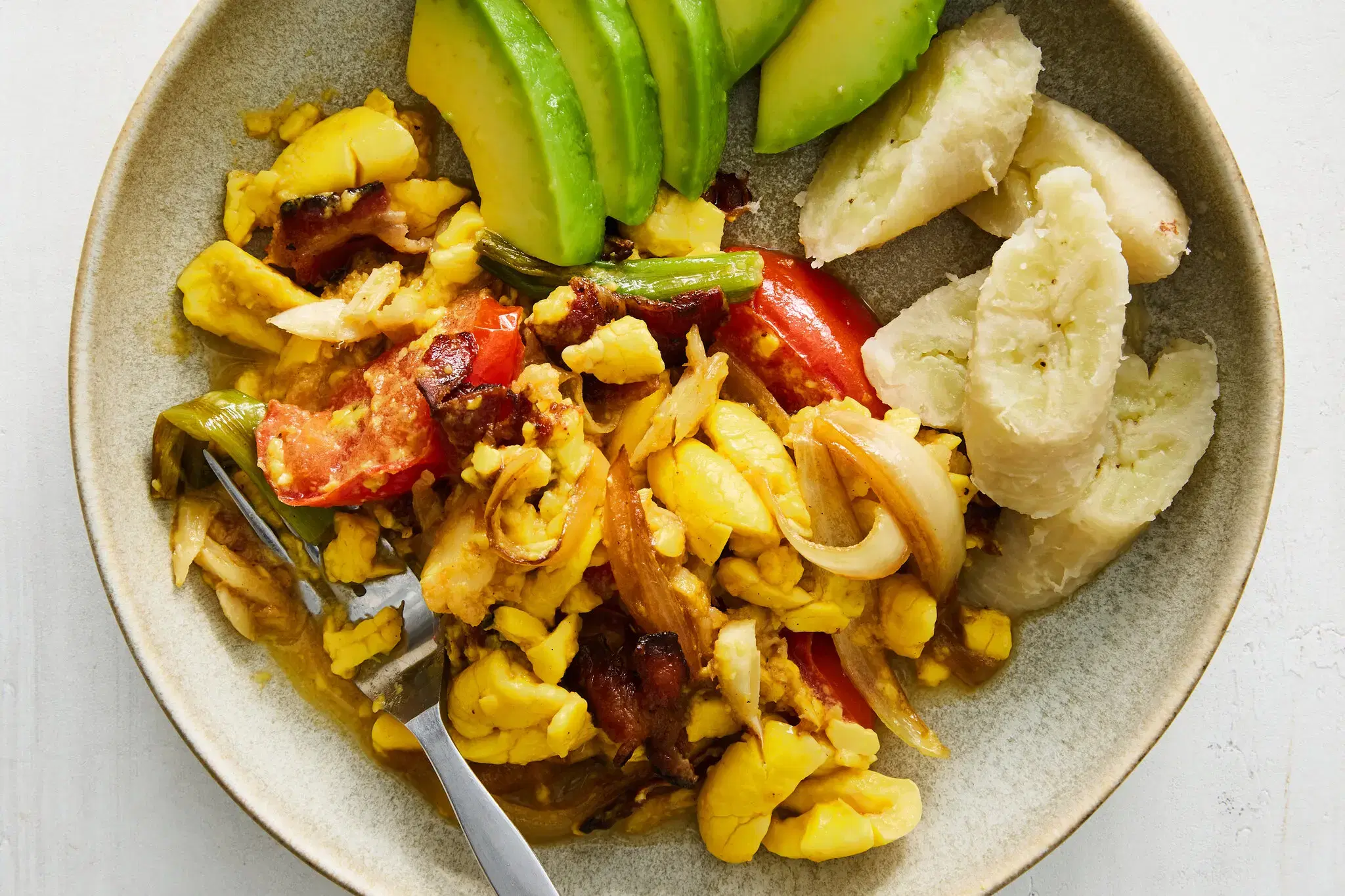
Ackee and Saltfish
Jamaica''s national dish — creamy ackee fruit sautéed with salted cod.

Bacalhau à Brás (Portuguese Salt Cod)
Shredded salt cod with crispy potatoes, scrambled eggs, and olives — Portugal's beloved comfort dish.

Baked Cod with Lemon and Dill
Baked cod with lemon, garlic, and fresh dill — light, flaky, and ready in 20 minutes.