mains · duck
Chinese Roast Duck (Simplified)
Crispy-skinned roast duck with a five-spice and hoisin glaze.

Nutrition (per serving)
520
Calories
38g
Protein
12g
Carbs
36g
Fat
0g
Fiber
Ingredients
For the duck:
For the glaze:
Method
-
Prepare the duck by removing the giblets and trimming excess fat from the cavity and neck. Score the skin in a crosshatch pattern — cuts should be 1 inch apart and just through the skin, not into the meat. The fat layer under duck skin is thick and needs escape routes to render properly. Prick the skin all over with a fork for additional fat release.
-
Apply the honey-vinegar wash. Mix 2 tablespoons honey with 1 tablespoon rice vinegar and 1 teaspoon five-spice powder. Brush this over the entire duck. Place the duck on a wire rack set over a rimmed sheet pan and refrigerate uncovered for 8–24 hours. The dry air of the refrigerator dehydrates the skin, which is essential for crispiness.
-
Make the glaze by whisking together hoisin, soy sauce, honey, Shaoxing wine, sesame oil, garlic, five-spice, and ginger. Set aside. This glaze goes on during the last 30 minutes of roasting — applying it too early causes the sugars to burn.
-
Roast at 425°F breast-side up on a wire rack in a roasting pan for 30 minutes. The high initial heat renders the surface fat rapidly. You'll see fat pooling in the pan — this is correct. After 30 minutes, reduce the oven to 350°F and continue roasting for 60–75 minutes.
-
Apply the glaze during the last 30 minutes. Brush a generous layer over the entire duck every 10 minutes — three applications total. Each layer builds the lacquered, glossy finish. The sugars in the hoisin and honey caramelize and create the characteristic BBQ duck color.
-
Check doneness with an instant-read thermometer in the thickest part of the thigh — it should read 165°F. The skin should be deep mahogany, crispy, and lacquered. If the skin is browning too fast, tent loosely with foil.
-
Rest for 15 minutes before carving. Use kitchen shears to cut through the breastbone, then separate the legs and thighs. Slice the breast meat against the grain. Serve with steamed rice, scallion pancakes, or inside steamed bao buns with hoisin sauce and sliced scallions.
Equipment
- Roasting pan with wire rack Recommended: Cuisinart 16-Inch Roasting Pan with Rack
- Instant-read thermometer Recommended: ThermoWorks ThermoPop 2
- Pastry brush (for glaze) Recommended: OXO Good Grips Silicone Pastry Brush
- Kitchen shears (for carving)
- Rimmed sheet pan Recommended: Nordic Ware Natural Aluminum Half Sheet Pan
Chef Notes
- The most important thing: Dry the duck skin thoroughly — pat it dry, then leave it uncovered in the refrigerator overnight on a wire rack. Dry skin crisps; wet skin steams. This single step is the difference between lacquered, crackling skin and flabby, rubbery skin.
- Score the skin in a crosshatch pattern without cutting into the meat. This allows the thick layer of subcutaneous fat to render out during roasting. Unscored duck retains its fat and the skin never crisps.
- The honey-vinegar wash before roasting helps the skin brown and develop the characteristic mahogany lacquer. Apply it after the overnight dry and again halfway through roasting.
- Start the duck breast-side up at high heat (425°F) for 30 minutes to kickstart rendering, then reduce to 350°F for the remaining cook time. This two-temperature approach renders fat while keeping the meat moist.
- Rest the duck for 15 minutes before carving. The juices redistribute and the skin stays crispy. Carve at the table for maximum drama.
Common Substitutions
| Ingredient | Substitution | Notes |
|---|---|---|
| Whole duck | Duck legs (4) | Easier to find, shorter cook time (75 min at 350°F). Less dramatic but same flavor |
| Hoisin sauce | Plum sauce + 1 tsp soy sauce | Different but complementary — plum sauce is sweeter |
| Shaoxing wine | Dry sherry | Nearly identical in cooking applications |
| Five-spice powder | Equal parts cinnamon, star anise, clove, fennel, Sichuan peppercorn (ground) | Homemade is more aromatic than pre-ground |
| Whole duck roasting | Sous vide legs + broil to crisp | More controlled but loses the whole-bird presentation |
What You're Practicing
Chinese BBQ duck teaches you fat rendering — the technique of slowly melting subcutaneous fat through controlled heat. This is the same principle behind crispy pork belly, duck confit, and roasted chicken with crispy skin. The key insight: fat needs escape routes (scoring) and time (low-and-slow) to render completely. Unrendered fat = flabby skin. Visit Techniques for more on rendering and roasting.
You're also learning glaze building — applying multiple thin layers of a sugar-based sauce during roasting to create a lacquered finish. This technique applies to honey-glazed ham, teriyaki, and char siu pork. Each layer caramelizes on top of the previous one, building depth of color and flavor. Explore more at Techniques.
Video Resources
Some equipment and ingredient links are affiliate links. We earn a small commission at no extra cost to you. Learn more
Comments (0)
Sign in to commentNo comments yet. Be the first to share your thoughts.
Frequently Asked Questions
- Can I make Chinese Roast Duck (Simplified) ahead of time?
- Yes. overnight on a wire rack.
- How do I store leftover Chinese Roast Duck (Simplified)?
- Store in an airtight container in the refrigerator for 3-4 days. Reheat gently over medium-low heat, adding a splash of broth or water to prevent drying out.
- Can I freeze Chinese Roast Duck (Simplified)?
- Yes — most cooked mains freeze well for up to 3 months. Cool completely, store in freezer-safe containers, and thaw overnight in the refrigerator before reheating.
- How many servings does this recipe make?
- This recipe serves 4. You can scale the ingredients up or down proportionally — use the Meal Plan servings slider to adjust the grocery list automatically.
- Why does Chinese Roast Duck (Simplified) take so long?
- This recipe takes 3 hours because low-and-slow cooking breaks down tough connective tissue into tender, flavorful gelatin. The hands-on time is much shorter — most of the cook time is unattended.
- Is Chinese Roast Duck (Simplified) dairy free and high protein and keto?
- Yes — this recipe is dairy free and high protein and keto. Check the Common Substitutions section for additional dietary adaptations.
- Is this an authentic Chinese recipe?
- This recipe follows traditional Chinese techniques and ingredients. The Chef Notes section explains any adaptations for home kitchen accessibility and suggests authentic alternatives where substitutions are made.
- What substitutions can I make for Chinese Roast Duck (Simplified)?
- See the Common Substitutions section above for ingredient and equipment swaps with specific trade-off notes for each alternative.
You Might Also Like
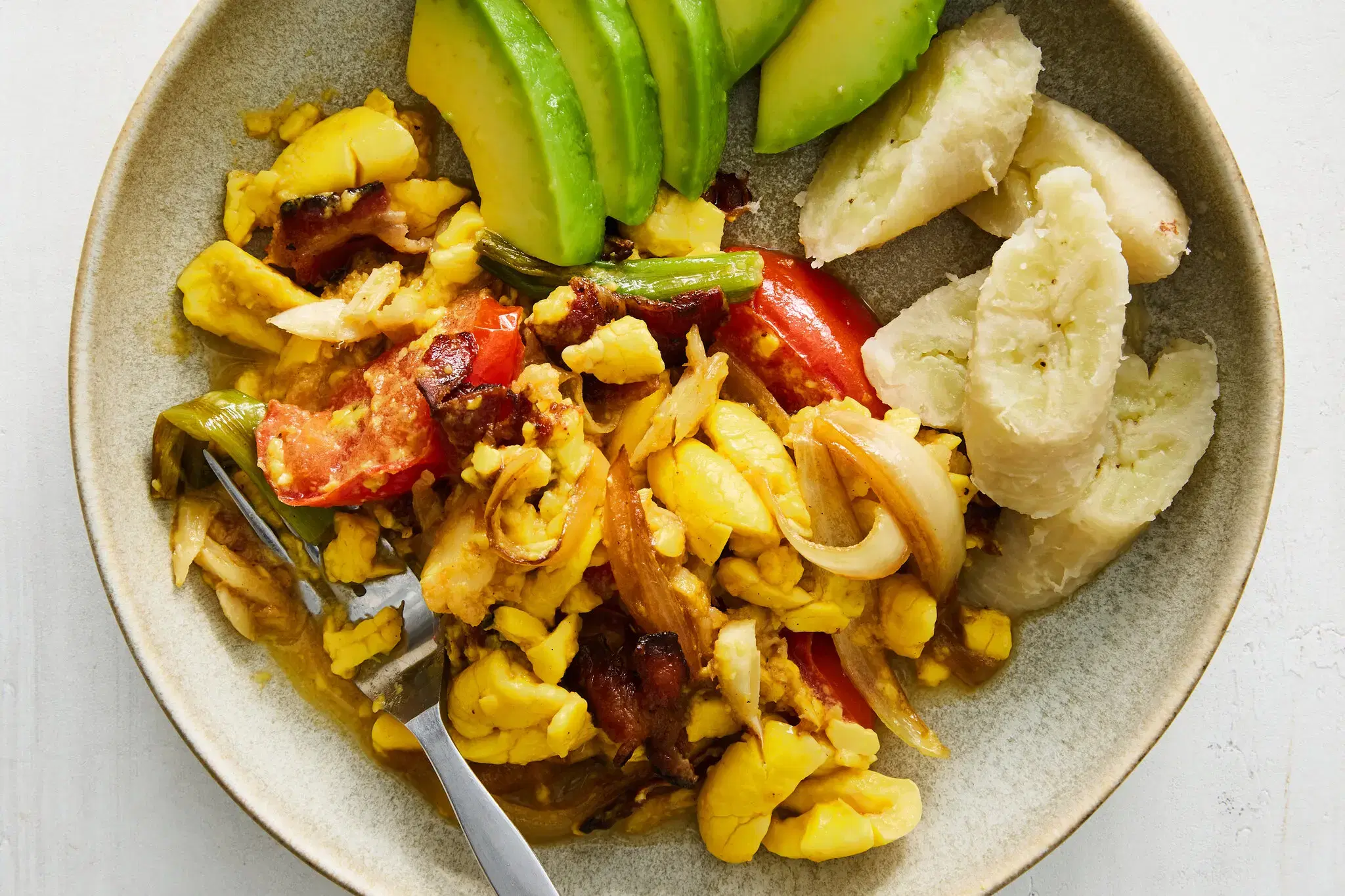
Ackee and Saltfish
Jamaica''s national dish — creamy ackee fruit sautéed with salted cod.

American BBQ Ribs (Oven-to-Grill)
Fall-off-the-bone pork ribs with a spice rub and sticky BBQ glaze — no smoker required.

Bacalhau à Brás (Portuguese Salt Cod)
Shredded salt cod with crispy potatoes, scrambled eggs, and olives — Portugal's beloved comfort dish.

Baked Cod with Lemon and Dill
Baked cod with lemon, garlic, and fresh dill — light, flaky, and ready in 20 minutes.