mains · seafood
Kokoda (Fijian Ceviche)
Fresh fish cured in lime and coconut cream with chili and tomato — Fiji's national dish.

Nutrition (per serving)
240
Calories
24g
Protein
8g
Carbs
14g
Fat
1g
Fiber
Ingredients
Method
-
Cube the fish into uniform 1/2-inch pieces. Uniformity matters — larger pieces won't "cook" through in the same time as smaller ones, leaving you with raw centers. Remove any bloodline, skin, or pin bones. The fish should be cold from the refrigerator.
-
Marinate in lime juice. Place the fish in a glass or ceramic bowl and pour the lime juice over it. The fish should be fully submerged — if not, add more lime juice. Cover and refrigerate for 2–3 hours. The fish is ready when it's completely opaque and firm throughout — break a piece open to check. It should look like cooked fish, white and flaky, not translucent.
-
Drain the fish through a fine-mesh strainer, discarding the lime juice. The acid has done its job — leaving the fish in the juice longer makes it tough and rubbery, like overcooked ceviche. Gently press to remove excess liquid but don't squeeze.
-
Scoop the thick coconut cream from the top of the refrigerated can. You want about 3/4 cup of the thick cream, not the watery liquid underneath. The cream should be the consistency of yogurt — thick enough to coat the fish.
-
Combine the drained fish with the coconut cream, tomato, red onion, cucumber, chili, and cilantro. Fold gently — the fish is delicate and will break apart if stirred aggressively. Season with salt. The mixture should be creamy, tangy, and fresh — the coconut cream balances the residual acidity from the lime.
-
Serve immediately in a bowl or, traditionally, in a halved coconut shell. Kokoda doesn't hold well — the acid continues to work on the fish and the coconut cream breaks down over time. Eat within 30 minutes of assembly for the best texture.
Equipment
- Glass or ceramic bowl (not metal — acid reacts with metal)
- Fine-mesh strainer Recommended: Winco 8-Inch Stainless Steel Fine Mesh Strainer
- Sharp knife Recommended: Victorinox Fibrox Pro 8-Inch Chef's Knife · Also good: Victorinox Fibrox Pro 8-Inch Chef's Knife
- Cutting board Recommended: John Boos Maple Edge-Grain Cutting Board 18x12
Chef Notes
- The most important thing: Use the freshest fish you can find — sashimi-grade if possible. The fish is "cooked" by the acid in the lime juice (denatured, technically), not by heat. Fresh fish is a food safety requirement, not just a quality preference.
- The fish needs to marinate in lime juice for at least 2 hours. The acid denatures the proteins the same way heat does — the flesh turns opaque and firm. Under-marinated fish will be translucent and soft in the center.
- Use the thick coconut cream from the top of a refrigerated can, not the watery liquid at the bottom. The cream is what gives kokoda its rich, silky texture. Shake the can before refrigerating and it won't separate properly.
- This is Fiji's national dish — the Pacific Island equivalent of ceviche. It's served as an appetizer or light meal, often in a coconut shell.
- Don't add the coconut cream until just before serving. If it sits in the acid too long, the cream breaks and the texture becomes grainy.
Common Substitutions
| Ingredient | Substitution | Notes |
|---|---|---|
| Snapper | Mahi-mahi, sea bass, or halibut | Any firm, fresh white fish works. Avoid oily fish like salmon or mackerel |
| Lime juice | Lemon juice | Slightly different acidity — use the same amount. Lime is traditional |
| Coconut cream | Full-fat coconut milk (unshaken, cream from top) | Same product, just less separated. Shake less = thicker cream |
| Red chili | Serrano or bird's eye chili | Adjust quantity for heat preference |
| Fresh cilantro | Fresh mint or flat-leaf parsley | Mint is common in Pacific Island variations |
What You're Practicing
Kokoda teaches you acid-cooking (denaturation) — the technique of using citrus acid to transform raw protein without heat. This is the same principle behind Peruvian ceviche, Mexican aguachile, and Italian crudo. Understanding how acid affects protein structure is a foundational food science concept: the acid unwinds protein chains and causes them to bond together, creating the same opaque, firm texture that heat produces. Visit Techniques for more on the science of cooking.
You're also learning to balance richness and acidity — the coconut cream tempers the sharp lime, while the fresh vegetables add crunch and brightness. This balance of fat + acid + texture is the foundation of every great dish, from salad dressings to braised meats. Explore more at Vinaigrettes.
Video Resources
Some equipment and ingredient links are affiliate links. We earn a small commission at no extra cost to you. Learn more
Comments (0)
Sign in to commentNo comments yet. Be the first to share your thoughts.
Frequently Asked Questions
- Can I make Kokoda (Fijian Ceviche) ahead of time?
- Yes. overnight - 1 medium tomato, seeded and finely diced - 1/2 red onion, finely diced - 1 small cucumber, seeded and finely diced - 1 red chili, seeded and minced (or to taste) - 2 tbsp fresh cilantro, chopped ## Method 1.
- How do I store leftover Kokoda (Fijian Ceviche)?
- Store in an airtight container in the refrigerator for 3-4 days. Reheat gently over medium-low heat, adding a splash of broth or water to prevent drying out.
- Can I freeze Kokoda (Fijian Ceviche)?
- Yes — most cooked mains freeze well for up to 3 months. Cool completely, store in freezer-safe containers, and thaw overnight in the refrigerator before reheating.
- How many servings does this recipe make?
- This recipe serves 4. You can scale the ingredients up or down proportionally — use the Meal Plan servings slider to adjust the grocery list automatically.
- Is Kokoda (Fijian Ceviche) a quick recipe?
- Yes — this recipe is ready in 25 minutes including prep time, making it perfect for busy weeknights.
- Is Kokoda (Fijian Ceviche) gluten free and high protein and keto?
- Yes — this recipe is gluten free and high protein and keto. Check the Common Substitutions section for additional dietary adaptations.
- Is this an authentic Peruvian recipe?
- This recipe follows traditional Peruvian techniques and ingredients. The Chef Notes section explains any adaptations for home kitchen accessibility and suggests authentic alternatives where substitutions are made.
- What substitutions can I make for Kokoda (Fijian Ceviche)?
- See the Common Substitutions section above for ingredient and equipment swaps with specific trade-off notes for each alternative.
You Might Also Like
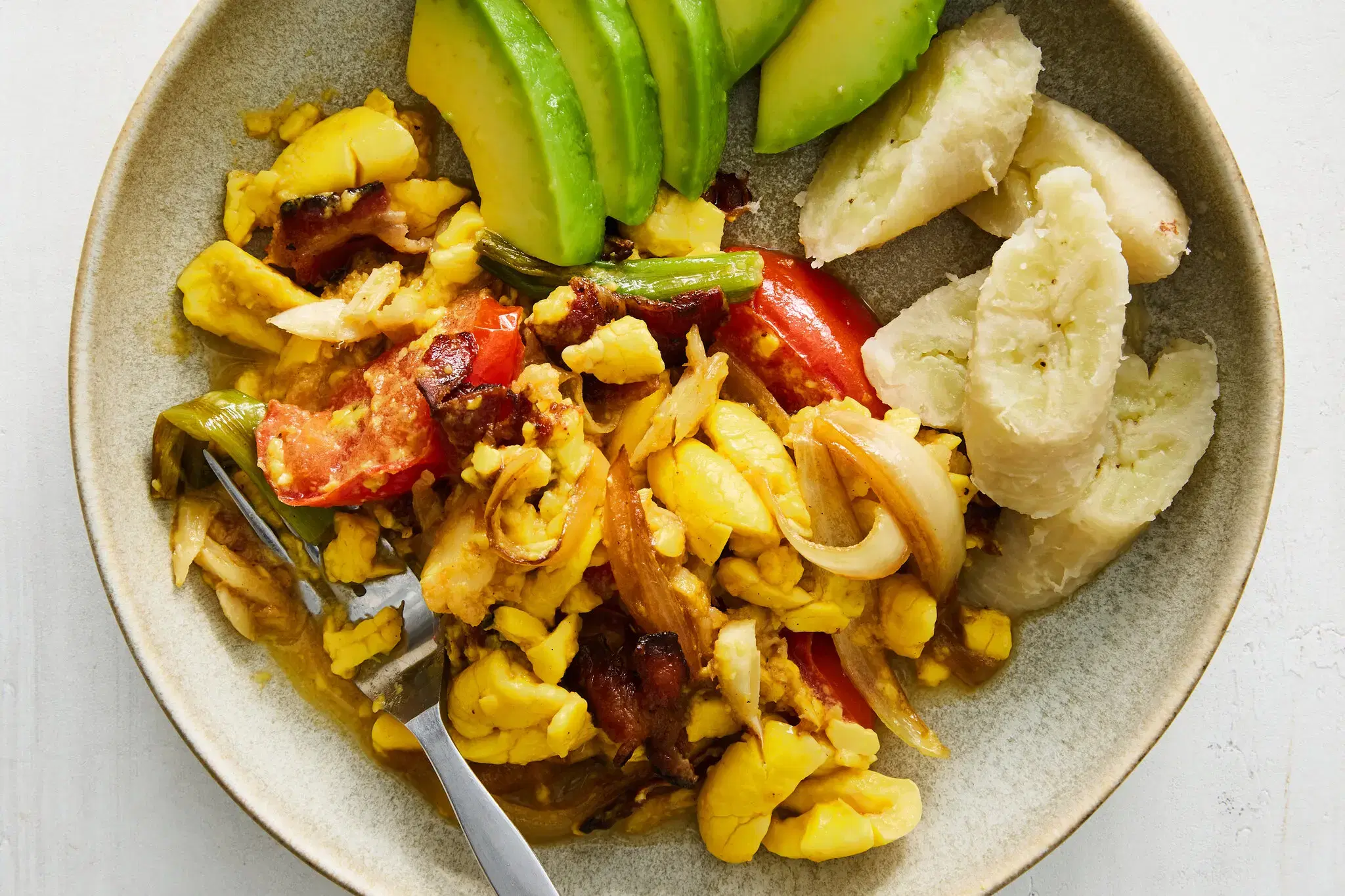
Ackee and Saltfish
Jamaica''s national dish — creamy ackee fruit sautéed with salted cod.

Baked Cod with Lemon and Dill
Baked cod with lemon, garlic, and fresh dill — light, flaky, and ready in 20 minutes.

Asian Chicken Lettuce Wraps
Asian chicken lettuce wraps with savory ground chicken, water chestnuts, and hoisin in butter lettuce.
Baja-Style Fish Tacos (Tilapia)
Baja-Style Fish Tacos (Tilapia) — a Mexican main dish Ready in 30 minutes. Perfect for weeknight cooking. Quick and easy.