mains · chicken
Filipino Chicken Adobo
Chicken braised in soy sauce, vinegar, garlic, and bay leaves — the Philippines' most beloved dish.

Nutrition (per serving)
380
Calories
34g
Protein
8g
Carbs
22g
Fat
0g
Fiber
Ingredients
For serving:
Method
-
Combine the braising liquid by mixing soy sauce, vinegar, smashed garlic, bay leaves, peppercorns, and water in a Dutch oven. Add the chicken pieces, skin-side down. The chicken doesn't need to be fully submerged — it braises in a concentrated liquid, not a soup.
-
Bring to a boil over medium-high heat without stirring. This is critical — the vinegar needs to reach a full boil to cook off its harsh volatile acids. Let it boil undisturbed for 5 minutes. You'll notice the sharp vinegar smell mellowing as the acids evaporate. After 5 minutes, the acidity transforms from sharp and aggressive to mellow and rounded.
-
Reduce to a gentle simmer, cover, and cook for 30-35 minutes, turning the chicken once halfway through. The chicken is done when it's tender and the meat pulls easily from the bone. The sauce should have reduced by about half and turned a deep, mahogany brown from the soy sauce.
-
Remove the chicken from the sauce. Heat vegetable oil in a separate skillet over medium-high heat. Sear the chicken pieces skin-side down for 3-4 minutes until the skin is deeply golden and crispy. This final sear is what elevates adobo from a simple braise to something special — the contrast between crispy skin and tender, saucy meat is the whole point.
-
Reduce the sauce if needed by simmering it over medium-high heat for 5-10 minutes until it's thick enough to coat the back of a spoon. The sauce should be glossy, concentrated, and intensely savory — a balance of salty soy and mellow vinegar with garlic perfuming everything.
-
Serve the chicken over steamed white rice, spooning the reduced sauce generously over everything. The rice absorbs the sauce and becomes the best part of the meal. Garnish with sliced scallions. In the Philippines, adobo is everyday food — it's meant to be simple, satisfying, and endlessly adaptable.
Equipment
- Dutch oven or heavy-bottomed pot with lid Recommended: Lodge 6-Quart Enameled Cast Iron Dutch Oven
- Tongs Also good: Wok Spatula
- Cast iron skillet Recommended: Lodge 12-Inch Pre-Seasoned Cast Iron Skillet
- Dutch oven Recommended: Lodge 6-Quart Enameled Cast Iron Dutch Oven · Also good: Lodge 6-Quart Enameled Cast Iron Dutch Oven
- Saucepan Recommended: Cuisinart Chef's Classic 3-Quart Saucepan
Chef Notes
- The most important thing: Do not stir the pot after adding the vinegar. Let it come to a full boil undisturbed for 5 minutes. Stirring vinegar before it boils releases harsh volatile acids that make the dish taste sharp and unpleasant. Once boiled, the harshness cooks off and you're left with mellow, rounded acidity.
- Use white cane vinegar (sukang maasim) if you can find it at an Asian grocery. It's milder and sweeter than distilled white vinegar. Apple cider vinegar is too fruity for adobo.
- Bone-in, skin-on chicken is essential. The bones add body to the sauce, and the skin crisps beautifully when you sear it at the end. Boneless chicken makes a flat, one-dimensional dish.
- Filipino adobo has no fixed recipe — every family has their own version. Some add coconut milk, some add sugar, some use pork instead of chicken. This is the classic Tagalog version.
- The sauce should reduce to a thick, glossy glaze that coats the chicken. If it's still watery after braising, remove the chicken and reduce the sauce over high heat.
Common Substitutions
| Ingredient | Substitution | Notes |
|---|---|---|
| Chicken thighs/drumsticks | Pork belly, cubed | Pork adobo is equally traditional — braise 45 min instead of 30 |
| White cane vinegar | Distilled white vinegar | Slightly harsher — reduce amount by 2 tbsp |
| Soy sauce | Coconut aminos | Lower sodium, slightly sweeter — good for soy-free diets |
| Whole peppercorns | 1 tsp ground black pepper | Less aromatic but works — add with the soy sauce |
| No coconut milk version | Add 1/2 cup coconut milk in last 10 min | Creates the creamier "adobo sa gata" variation |
What You're Practicing
Filipino adobo teaches you the power of acid in braising. The vinegar doesn't just add flavor — it tenderizes the meat and acts as a preservative (adobo was originally a preservation technique before refrigeration). Understanding how acid interacts with protein during long cooking — tenderizing at low concentrations, toughening at high — is fundamental to braising, marinating, and curing. Visit Brines, Cures & Marinades for more.
The two-stage approach — braise first, then sear — is the reverse of most Western cooking (which sears first, then braises). This technique gives you tender meat with crispy skin, which is impossible to achieve in a single step. The same approach appears in duck confit (slow cook in fat, then crisp the skin) and Chinese red-cooked pork. See Techniques for more on two-stage cooking.
Video Resources
Some equipment and ingredient links are affiliate links. We earn a small commission at no extra cost to you. Learn more
Comments (0)
Sign in to commentNo comments yet. Be the first to share your thoughts.
Frequently Asked Questions
- Can I make Filipino Chicken Adobo ahead of time?
- Yes — prep the components up to a day ahead and store covered in the refrigerator. Reheat gently or bring to room temperature before serving.
- How do I store leftover Filipino Chicken Adobo?
- Store in an airtight container in the refrigerator for 3-4 days. Reheat gently over medium-low heat, adding a splash of broth or water to prevent drying out.
- Can I freeze Filipino Chicken Adobo?
- Yes — most cooked mains freeze well for up to 3 months. Cool completely, store in freezer-safe containers, and thaw overnight in the refrigerator before reheating.
- How many servings does this recipe make?
- This recipe serves 4. You can scale the ingredients up or down proportionally — use the Meal Plan servings slider to adjust the grocery list automatically.
- Is Filipino Chicken Adobo dairy free and high protein and keto?
- Yes — this recipe is dairy free and high protein and keto. Check the Common Substitutions section for additional dietary adaptations.
- Is this an authentic Filipino recipe?
- This recipe follows traditional Filipino techniques and ingredients. The Chef Notes section explains any adaptations for home kitchen accessibility and suggests authentic alternatives where substitutions are made.
- What substitutions can I make for Filipino Chicken Adobo?
- See the Common Substitutions section above for ingredient and equipment swaps with specific trade-off notes for each alternative.
You Might Also Like
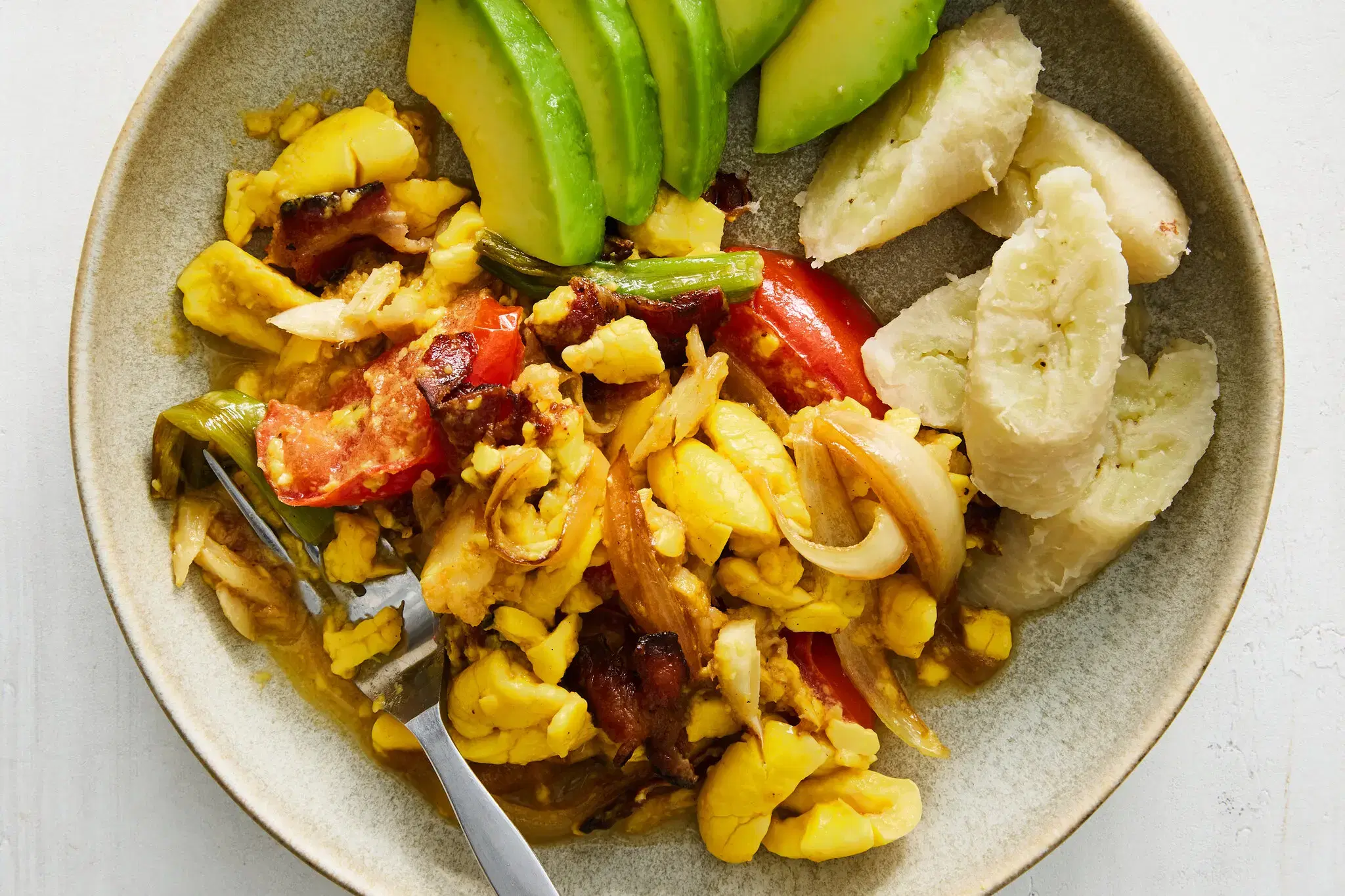
Ackee and Saltfish
Jamaica''s national dish — creamy ackee fruit sautéed with salted cod.

Asian Chicken Lettuce Wraps
Asian chicken lettuce wraps with savory ground chicken, water chestnuts, and hoisin in butter lettuce.

Baked Cod with Lemon and Dill
Baked cod with lemon, garlic, and fresh dill — light, flaky, and ready in 20 minutes.
Baja-Style Fish Tacos (Tilapia)
Baja-Style Fish Tacos (Tilapia) — a Mexican main dish Ready in 30 minutes. Perfect for weeknight cooking. Quick and easy.