mains · Beef
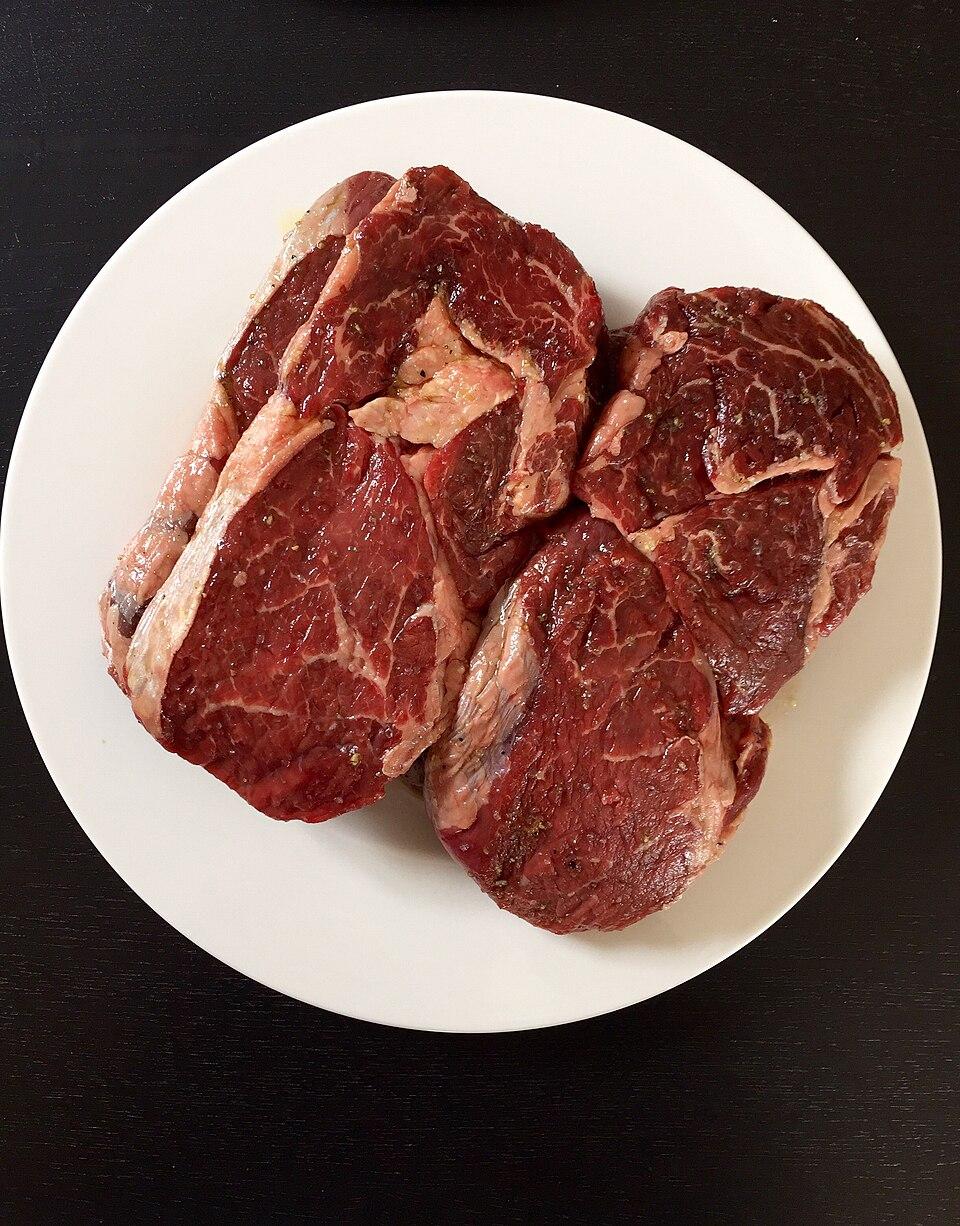
Reverse-Sear Ribeye Steak
Reverse-Sear Ribeye Steak — a main dish Ready in 60 minutes.
Nutrition (per serving)
450
Calories
38g
Protein
6g
Carbs
28g
Fat
1g
Fiber
Ingredients
Method
-
Season the steaks generously with salt and pepper. Place on a wire rack set over a sheet pan. Refrigerate uncovered for 1–24 hours (the surface dries out for a better sear).
Season generously — underseasoned food is the most common home cooking mistake. You can always add more at the end, but building seasoning in layers produces deeper flavor than a single pass.
-
Slow-cook in the oven. Preheat to 250°F. Place the rack-and-pan setup in the oven. Cook for 30–45 minutes until the internal temperature reaches 115°F (for medium-rare final temp of 130°F). The steaks will look gray and unappetizing — that's fine.
-
Sear in a screaming-hot pan. Heat a cast iron skillet over high heat until smoking. Add oil. Sear steaks for 1 minute per side until a dark, mahogany crust forms. The dry surface sears instantly.
-
Baste with butter. Add butter, garlic, thyme, and rosemary. Tilt the pan and spoon the foaming butter over the steaks for 30 seconds.
-
Rest for 3 minutes. Slice against the grain. The interior should be uniformly pink from edge to edge.
Resting is not optional. When meat cooks, the muscle fibers contract and push moisture toward the center. Resting allows the fibers to relax and the juices to redistribute evenly throughout the cut.
Equipment
- Wire rack set on a rimmed sheet pan Recommended: Nordic Ware Natural Aluminum Half Sheet Pan
- Cast iron skillet Recommended: Lodge 12-Inch Pre-Seasoned Cast Iron Skillet
- Instant-read thermometer Recommended: ThermoWorks ThermoPop 2
- Tongs Also good: Wok Spatula
Chef Notes
- The most important thing: The reverse sear flips the traditional method — you cook the steak low and slow in the oven first, then sear it in a screaming-hot pan at the end. This produces the most even doneness from edge to edge. Traditional searing creates a gray band of overcooked meat around the pink center. Reverse sear eliminates it.
- Salt the steaks at least 1 hour before cooking (overnight is better). The salt draws out moisture, dissolves, and is reabsorbed — seasoning the meat throughout and drying the surface for a better sear.
- The oven temperature is low — 250°F. This gently brings the interior to 115°F (for medium-rare) without overcooking the exterior. It takes 30–45 minutes depending on thickness.
- The final sear is fast — 1 minute per side in a smoking-hot pan. The surface is already dry from the oven, so it sears instantly. No gray band.
- Rest is minimal after reverse sear — the gentle oven cooking means the juices are already evenly distributed. 3 minutes is enough.
Common Substitutions
| Ingredient | Substitution | Notes |
|---|---|---|
| Ribeye | NY strip or porterhouse | Any thick steak (1.5"+ thick) |
| Oven reverse sear | Smoker at 225°F | Adds smoke flavor — same technique |
| Cast iron sear | Charcoal grill (direct heat) | Even better crust |
| Butter baste | Compound butter on top while resting | Simpler, still rich |
| Fresh herbs | Dried herbs | Less aromatic |
What You're Practicing
Reverse sear ribeye teaches you two-stage temperature control — using low heat for even internal cooking, then high heat for crust development. This is the most precise way to cook thick proteins and eliminates the overcooked gray band. Visit Techniques for more on two-stage cooking.
You're also learning butter basting — tilting the pan and spooning foaming butter over protein to add richness and cook the top surface gently. This finishing technique is used for steaks, fish, and chicken. Explore more at Techniques.
Video Resources
Some equipment and ingredient links are affiliate links. We earn a small commission at no extra cost to you. Learn more
Comments (0)
Sign in to commentNo comments yet. Be the first to share your thoughts.
Frequently Asked Questions
- Can I make Reverse-Sear Ribeye Steak ahead of time?
- Yes. overnight is better).
- How do I store leftover Reverse-Sear Ribeye Steak?
- Store in an airtight container in the refrigerator for 3-4 days. Reheat gently over medium-low heat, adding a splash of broth or water to prevent drying out.
- Can I freeze Reverse-Sear Ribeye Steak?
- Yes — most cooked mains freeze well for up to 3 months. Cool completely, store in freezer-safe containers, and thaw overnight in the refrigerator before reheating.
- How many servings does this recipe make?
- This recipe serves 4. You can scale the ingredients up or down proportionally — use the Meal Plan servings slider to adjust the grocery list automatically.
- Is Reverse-Sear Ribeye Steak gluten free and high protein and keto?
- Yes — this recipe is gluten free and high protein and keto. Check the Common Substitutions section for additional dietary adaptations.
- What substitutions can I make for Reverse-Sear Ribeye Steak?
- See the Common Substitutions section above for ingredient and equipment swaps with specific trade-off notes for each alternative.
You Might Also Like
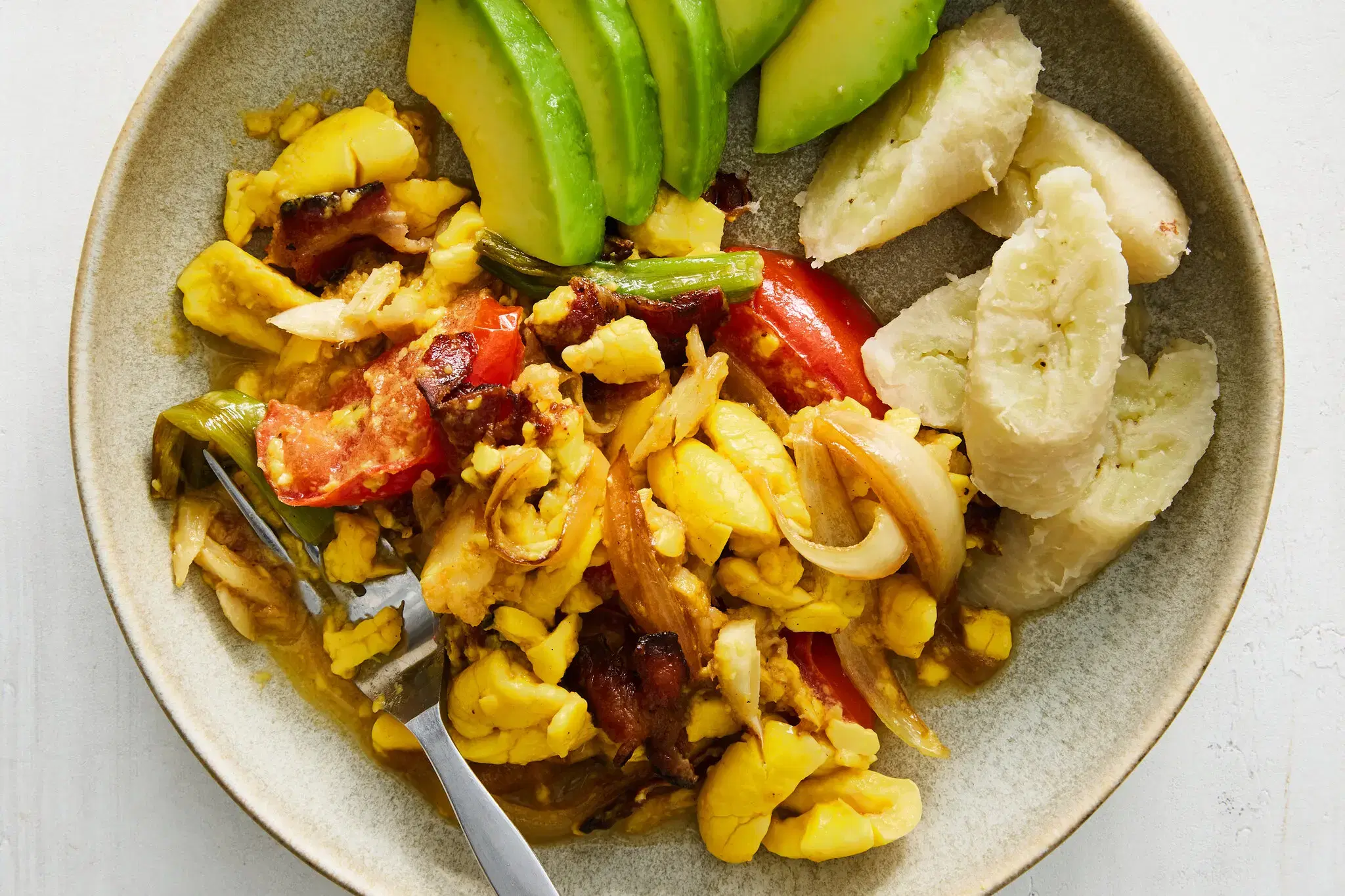
Ackee and Saltfish
Jamaica''s national dish — creamy ackee fruit sautéed with salted cod.

Argentine Steak with Chimichurri
Grilled ribeye with Argentina's iconic chimichurri — raw herb sauce with red wine vinegar and garlic.

Bacalhau à Brás (Portuguese Salt Cod)
Shredded salt cod with crispy potatoes, scrambled eggs, and olives — Portugal's beloved comfort dish.

American BBQ Ribs (Oven-to-Grill)
Fall-off-the-bone pork ribs with a spice rub and sticky BBQ glaze — no smoker required.