mains · plant-based
Palusami (Samoan Coconut Taro Leaves)
Taro leaves stuffed with coconut cream and onion, wrapped and baked — Samoa's traditional feast dish.

Nutrition (per serving)
280
Calories
6g
Protein
18g
Carbs
22g
Fat
4g
Fiber
Ingredients
Method
-
Prepare the leaves by washing taro leaves thoroughly. Remove the tough center stems. If using spinach, just wash and drain.
Drain thoroughly — excess water dilutes sauces and prevents browning. A few extra seconds of draining makes a noticeable difference in the final dish.
Drain thoroughly — excess water dilutes sauces and prevents browning. A few extra seconds of draining makes a noticeable difference in the final dish.
-
Make the filling by mixing coconut cream, diced onion, and salt.
Salt early and throughout the cooking process. Salt added at the beginning penetrates the food; salt added at the end sits on the surface. Both are important, but the foundation matters most.
Salt early and throughout the cooking process. Salt added at the beginning penetrates the food; salt added at the end sits on the surface. Both are important, but the foundation matters most.
-
Assemble by laying 3-4 taro leaves overlapping on a sheet of foil. Pour 1/4 cup coconut cream mixture in the center. Fold the leaves over the cream, then wrap tightly in foil. Make 4-6 packages.
-
Bake at 350°F for 1-1.5 hours (30 minutes if using spinach). The leaves should be completely tender and the coconut cream absorbed.
Position the rack in the center of the oven for even heat distribution. The top rack runs hotter (closer to the heating element) and the bottom rack is cooler.
Position the rack in the center of the oven for even heat distribution. The top rack runs hotter (closer to the heating element) and the bottom rack is cooler.
-
Serve by unwrapping at the table. In Samoa, palusami is served at every umu feast alongside roasted pork, taro, and breadfruit. It's the vegetable dish that everyone fights over.
Roasting at high heat creates caramelization on the surface while the interior cooks gently. Don't crowd the pan — overcrowding traps steam and prevents browning.
Roasting at high heat creates caramelization on the surface while the interior cooks gently. Don't crowd the pan — overcrowding traps steam and prevents browning.
Equipment
- Rimmed sheet pan Recommended: Nordic Ware Natural Aluminum Half Sheet Pan
- Aluminum foil
Chef Notes
- The most important thing: Taro leaves MUST be cooked thoroughly — at least 1 hour. Raw taro leaves contain calcium oxalate crystals that cause intense throat irritation. Long cooking neutralizes them completely.
- If you can't find taro leaves, spinach is the most common substitute. It doesn't need the long cooking time — reduce to 30 minutes.
- Use coconut cream (thick), not coconut milk. The richness of the cream is what makes palusami luxurious.
- Wrap tightly in foil to create a sealed package. The coconut cream steams inside, infusing the leaves.
- Palusami is traditionally cooked in an umu (earth oven). The oven adaptation works well at 350°F.
Common Substitutions
| Ingredient | Substitution | Notes |
|---|---|---|
| Taro leaves | Spinach or Swiss chard | Reduce cook time to 30 min — no oxalate concern |
| Coconut cream | Full-fat coconut milk | Thinner — use only the thick part from the top of the can |
| Oven baking | Grill (indirect heat, 1 hour) | Adds smoky flavor — closer to traditional umu |
What You're Practicing
Palusami teaches you leaf-wrapped cooking — using leaves as both vessel and ingredient. The same technique appears in Greek dolmades, Vietnamese bánh lá, and Polynesian laulau. Visit Techniques for more.
Video Resources
Some equipment and ingredient links are affiliate links. We earn a small commission at no extra cost to you. Learn more
Comments (0)
Sign in to commentNo comments yet. Be the first to share your thoughts.
Frequently Asked Questions
- Can I make Palusami (Samoan Coconut Taro Leaves) ahead of time?
- Yes — prep the components up to a day ahead and store covered in the refrigerator. Reheat gently or bring to room temperature before serving.
- How do I store leftover Palusami (Samoan Coconut Taro Leaves)?
- Store in an airtight container in the refrigerator for 3-4 days. Reheat gently over medium-low heat, adding a splash of broth or water to prevent drying out.
- Can I freeze Palusami (Samoan Coconut Taro Leaves)?
- Yes — most cooked mains freeze well for up to 3 months. Cool completely, store in freezer-safe containers, and thaw overnight in the refrigerator before reheating.
- How many servings does this recipe make?
- This recipe serves 4. You can scale the ingredients up or down proportionally — use the Meal Plan servings slider to adjust the grocery list automatically.
- Is Palusami (Samoan Coconut Taro Leaves) gluten free and high protein and plant based and vegetarian?
- Yes — this recipe is gluten free and high protein and plant based and vegetarian. Check the Common Substitutions section for additional dietary adaptations.
- What substitutions can I make for Palusami (Samoan Coconut Taro Leaves)?
- See the Common Substitutions section above for ingredient and equipment swaps with specific trade-off notes for each alternative.
You Might Also Like
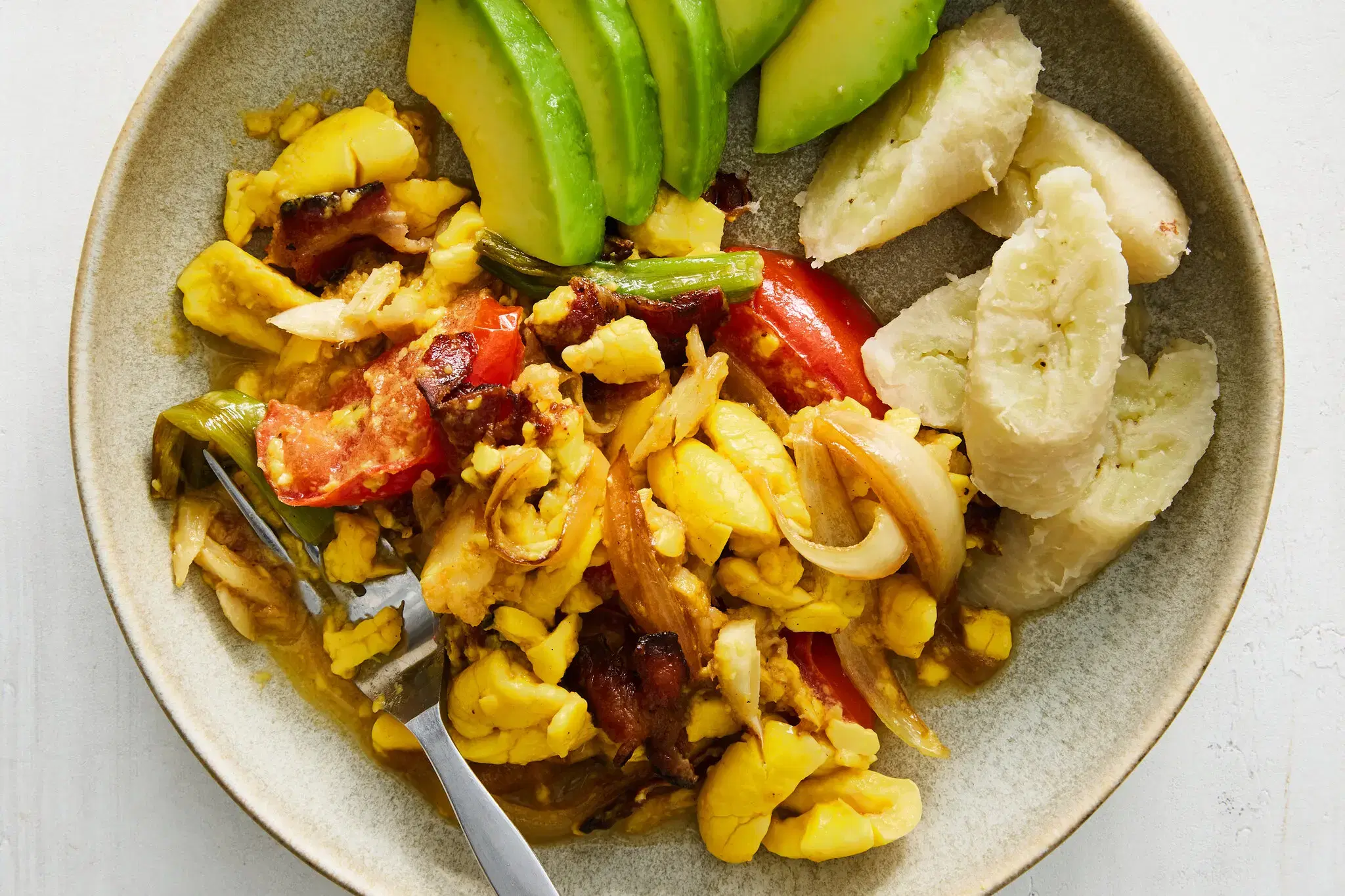
Ackee and Saltfish
Jamaica''s national dish — creamy ackee fruit sautéed with salted cod.

Baked Cod with Lemon and Dill
Baked cod with lemon, garlic, and fresh dill — light, flaky, and ready in 20 minutes.

Asian Chicken Lettuce Wraps
Asian chicken lettuce wraps with savory ground chicken, water chestnuts, and hoisin in butter lettuce.

Baked Cod with Herb Breadcrumbs
Baked Cod with Herb Breadcrumbs — a main dish Ready in 25 minutes. Perfect for weeknight cooking. Quick and easy.