mains · Eggs
French Omelet with Fine Herbs
Where every culinary journey begins — knife skills, mise en place, and the vegetable techniques that form the foundation of all cooking.

Nutrition (per serving)
380
Calories
30g
Protein
12g
Carbs
22g
Fat
2g
Fiber
Ingredients
Optional fillings (choose one):
Method
-
Beat the eggs with a pinch of salt until the yolks and whites are fully combined — no streaks. Don't overbeat or add milk/cream. French omelets are pure egg.
-
Heat the pan over medium-low heat. Add butter and swirl to coat. The butter should foam gently — if it sizzles aggressively or browns, the pan is too hot. Reduce heat.
-
Pour in the eggs. Immediately stir with a fork or chopsticks, making small circles while shaking the pan back and forth. This creates tiny, creamy curds. Continue for 20–30 seconds until the eggs are half-set — like loose scrambled eggs.
-
Stop stirring. Let the eggs sit for 15–20 seconds to form a thin, smooth skin on the bottom. The top should still be slightly wet and creamy.
-
Add filling (if using) across the center third of the omelet.
-
Fold and roll. Tilt the pan at a 45-degree angle. Use the spatula to fold the top third of the omelet toward the center, then roll it onto the plate seam-side down. The omelet should be a smooth, pale, cigar-shaped roll.
-
Garnish with a line of chives and a small knob of butter rubbed across the top for shine.
Equipment
- 8-inch nonstick skillet Recommended: All-Clad HA1 Expert Hard Anodized Nonstick Frying Pan
- Fork or chopsticks
- Rubber spatula Recommended: GIR Ultimate Silicone Spatula
Chef Notes
- The most important thing: The pan must be the right temperature — medium-low, not medium-high. A French omelet should have zero color on the outside. If the eggs brown, the pan is too hot. The exterior should be pale yellow and silky smooth, like a pillow.
- Use a nonstick pan. This is one of the few times a nonstick pan is the right tool. A French omelet needs to slide freely — sticking ruins the fold.
- Stir the eggs constantly with a fork or chopsticks for the first 30 seconds. This creates small, soft curds throughout. Then stop stirring and let the bottom set into a thin, smooth layer.
- The center should be slightly underset (baveuse) when you fold. The residual heat finishes cooking it. If the center is fully set before folding, the omelet is overcooked.
- Jacques Pépin's technique: shake the pan forward while stirring with a fork held flat. The eggs simultaneously set on the bottom and form curds in the center. It takes practice — your first 10 will be ugly. That's normal.
Common Substitutions
| Ingredient | Substitution | Notes |
|---|---|---|
| Butter | Clarified butter | Higher smoke point — easier to control |
| Gruyère | Any melting cheese | Brie, fontina, or goat cheese |
| 3 eggs | 2 eggs | Smaller omelet — use a 6-inch pan |
| Nonstick pan | Well-seasoned carbon steel | Traditional French choice — requires more skill |
| Fork stirring | Chopsticks | Finer curds, more control |
What You're Practicing
The French omelet is the ultimate test of heat control and pan technique. You're learning to cook eggs at the lowest effective temperature — just enough heat to set the proteins without browning them. This same gentle-heat principle applies to custards, scrambled eggs, and crème anglaise. Visit Techniques for more on egg cookery.
You're also learning the fold-and-roll — shaping soft food in the pan using gravity and a tilted angle. This technique transfers to crêpes, blintzes, and any rolled preparation. Explore more at Techniques.
Video Resources
Some equipment and ingredient links are affiliate links. We earn a small commission at no extra cost to you. Learn more
Comments (0)
Sign in to commentNo comments yet. Be the first to share your thoughts.
Frequently Asked Questions
- Can I make French Omelet with Fine Herbs ahead of time?
- Yes — prep the components up to a day ahead and store covered in the refrigerator. Reheat gently or bring to room temperature before serving.
- How do I store leftover French Omelet with Fine Herbs?
- Store in an airtight container in the refrigerator for 3-4 days. Reheat gently over medium-low heat, adding a splash of broth or water to prevent drying out.
- Can I freeze French Omelet with Fine Herbs?
- Yes — most cooked mains freeze well for up to 3 months. Cool completely, store in freezer-safe containers, and thaw overnight in the refrigerator before reheating.
- How many servings does this recipe make?
- This recipe serves 4. You can scale the ingredients up or down proportionally — use the Meal Plan servings slider to adjust the grocery list automatically.
- Is French Omelet with Fine Herbs a quick recipe?
- Yes — this recipe is ready in 5 minutes including prep time, making it perfect for busy weeknights.
- Is French Omelet with Fine Herbs gluten free and high protein and vegetarian and keto?
- Yes — this recipe is gluten free and high protein and vegetarian and keto. Check the Common Substitutions section for additional dietary adaptations.
- Is this an authentic French recipe?
- This recipe follows traditional French techniques and ingredients. The Chef Notes section explains any adaptations for home kitchen accessibility and suggests authentic alternatives where substitutions are made.
- What substitutions can I make for French Omelet with Fine Herbs?
- See the Common Substitutions section above for ingredient and equipment swaps with specific trade-off notes for each alternative.
You Might Also Like
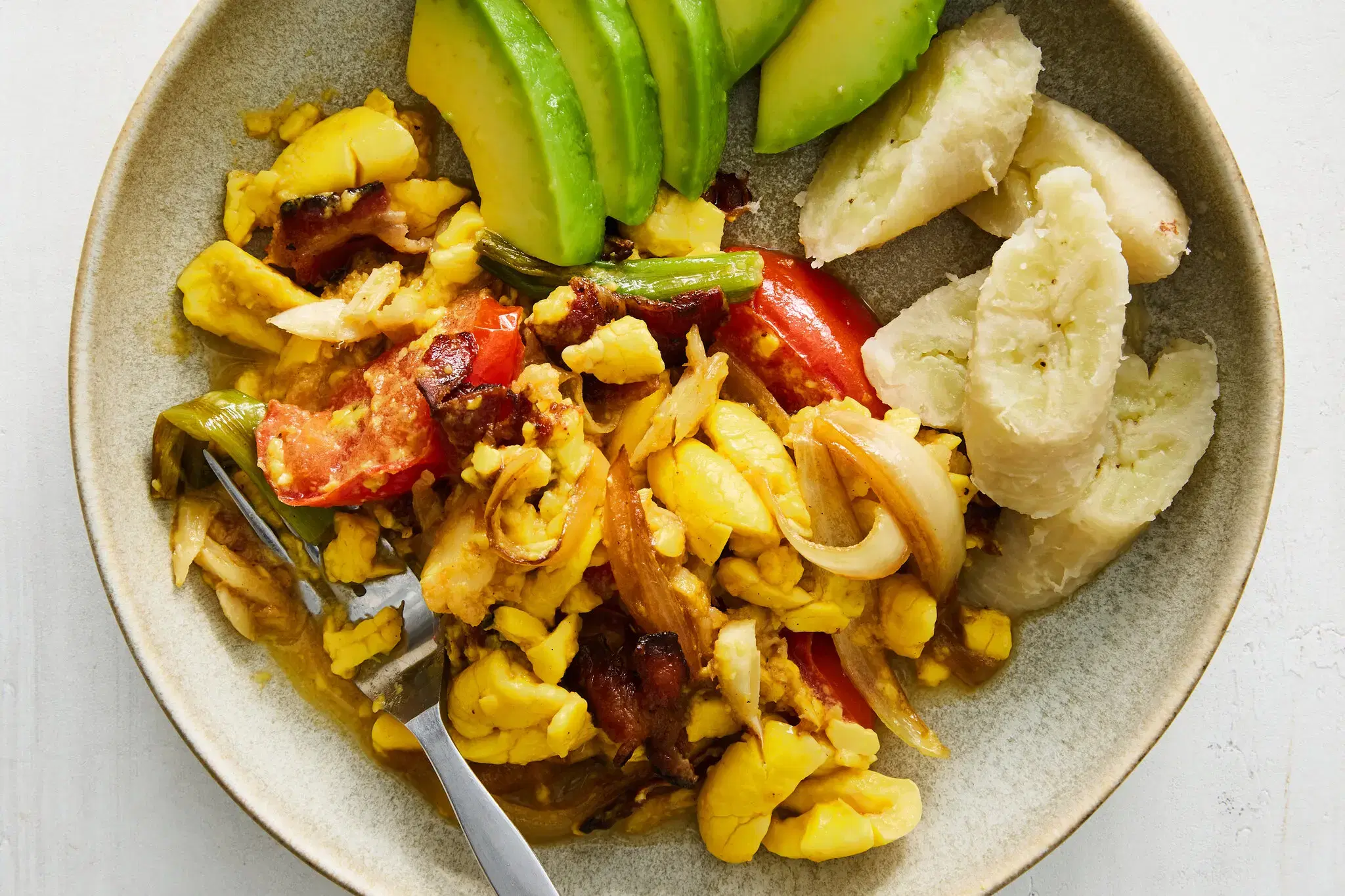
Ackee and Saltfish
Jamaica''s national dish — creamy ackee fruit sautéed with salted cod.

Asian Chicken Lettuce Wraps
Asian chicken lettuce wraps with savory ground chicken, water chestnuts, and hoisin in butter lettuce.

Baked Cod with Lemon and Dill
Baked cod with lemon, garlic, and fresh dill — light, flaky, and ready in 20 minutes.
Baja-Style Fish Tacos (Tilapia)
Baja-Style Fish Tacos (Tilapia) — a Mexican main dish Ready in 30 minutes. Perfect for weeknight cooking. Quick and easy.