salads · composed
Seaweed Salad (Wakame)
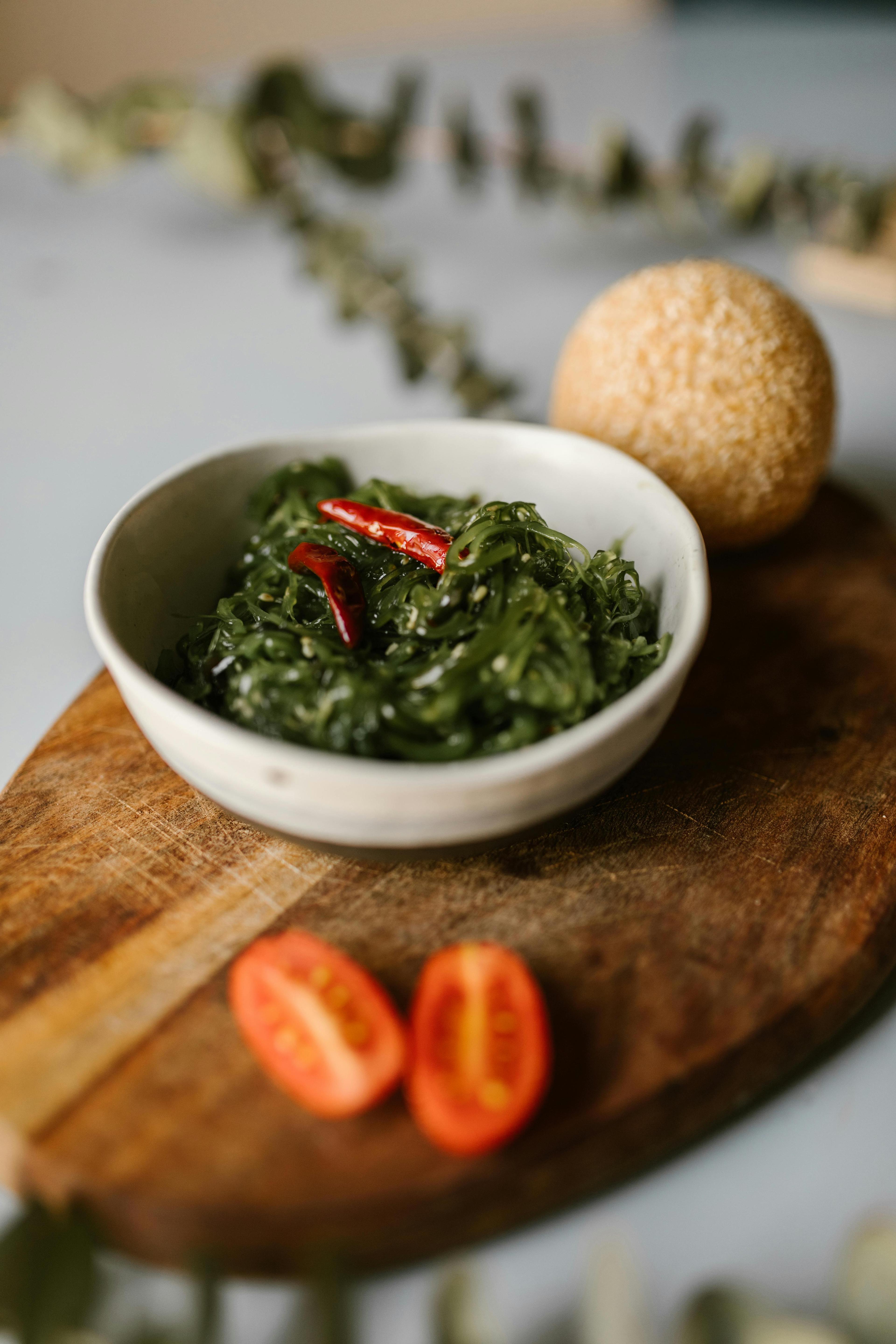
Wakame seaweed salad in a sesame-soy-ginger dressing — the classic sushi restaurant starter.
Nutrition (per serving)
70
Calories
2g
Protein
8g
Carbs
3g
Fat
1g
Fiber
Ingredients
For the seaweed:
For the dressing:
For topping:
Method
-
Rehydrate the wakame by soaking in a bowl of cold water for 5 minutes. The dried seaweed will expand to about 8 times its dry volume, transforming from brittle sheets into silky, tender ribbons. Drain through a fine-mesh strainer and squeeze out as much water as possible.
-
Make the dressing by whisking rice vinegar, soy sauce, sesame oil, sugar, and grated ginger until the sugar dissolves. The balance should be tangy (vinegar), savory (soy), nutty (sesame), and slightly sweet. The ginger adds a fresh, warming note.
-
Toss the wakame with the dressing until evenly coated. The silky seaweed absorbs the dressing quickly. Add sliced cucumber if using — it adds a fresh crunch that contrasts with the soft seaweed.
-
Top with toasted sesame seeds and serve chilled. This salad keeps well in the fridge for up to 2 days — the flavors actually improve as the wakame absorbs more dressing.
Serve immediately while the textures and temperatures are at their peak. Most dishes begin declining the moment they leave the heat — crispy things soften, sauces thicken, and aromatics fade.
Equipment
- Medium bowl (for soaking)
- Small bowl for dressing
- Fine-mesh strainer Recommended: Winco 8-Inch Stainless Steel Fine Mesh Strainer
Chef Notes
- The most important thing: Dried wakame expands dramatically — 1 oz makes about 2 cups rehydrated. Soak in cold water for exactly 5 minutes. Over-soaking makes it slimy and mushy; under-soaking leaves it tough. Drain and squeeze out excess water thoroughly.
- This is the exact seaweed salad served at sushi restaurants. The dressing is simple: rice vinegar, soy, sesame oil, sugar, and ginger.
- Squeeze the rehydrated wakame dry before dressing. Excess water dilutes the dressing and makes the salad watery.
- Toasted sesame seeds add a nutty crunch. Toast them in a dry skillet for 2 minutes until golden and fragrant.
- Serve chilled. This salad is best cold, straight from the fridge.
Common Substitutions
| Ingredient | Substitution | Notes |
|---|---|---|
| Parmesan | Pecorino Romano or nutritional yeast | Pecorino is sharper. Nutritional yeast for dairy-free. |
| Soy sauce | Tamari or coconut aminos | Tamari is gluten-free. Coconut aminos are lower sodium. |
| Rice vinegar | White wine vinegar or apple cider vinegar | Both are milder than distilled white. |
| Sesame oil | Toasted walnut oil or peanut oil | Walnut oil is nuttier. Peanut oil for frying. |
| Sugar | Coconut sugar or maple syrup | Coconut sugar is 1:1. Maple: reduce liquid slightly. |
| Fresh ginger | Ground ginger (¼ tsp per tbsp fresh) | Ground is more concentrated — use less. |
What You're Practicing
Working with dried seaweed teaches you about rehydration — the same principle behind soaking dried mushrooms, sun-dried tomatoes, and dried chiles. Understanding how dried ingredients transform when rehydrated, and how soaking time affects texture, is a fundamental skill. Visit Vinaigrettes for more on Asian-style dressings.
Seaweed introduces you to umami from a plant source. Wakame, kombu, and nori are rich in glutamic acid — the same compound that makes Parmesan cheese, soy sauce, and tomatoes taste savory. Understanding umami sources beyond meat and cheese expands your flavor toolkit.
Some equipment and ingredient links are affiliate links. We earn a small commission at no extra cost to you. Learn more
Comments (0)
Sign in to commentNo comments yet. Be the first to share your thoughts.
Frequently Asked Questions
- Can I make Seaweed Salad (Wakame) ahead of time?
- Prep the components separately and assemble just before serving. Dressed salads wilt within an hour.
- How do I store leftover Seaweed Salad (Wakame)?
- Store undressed components separately in the refrigerator for up to 2 days. Dress just before serving to keep greens crisp.
- Can I freeze Seaweed Salad (Wakame)?
- Salads with fresh greens do not freeze well. However, protein components and cooked grains can be frozen separately and assembled fresh.
- How many servings does this recipe make?
- This recipe serves 4. You can scale the ingredients up or down proportionally — use the Meal Plan servings slider to adjust the grocery list automatically.
- Is Seaweed Salad (Wakame) a quick recipe?
- Yes — this recipe is ready in 10 minutes including prep time, making it perfect for busy weeknights.
- Is Seaweed Salad (Wakame) dairy free and gluten free and vegan?
- Yes — this recipe is dairy free and gluten free and vegan. Check the Common Substitutions section for additional dietary adaptations.
- Is this an authentic Japanese recipe?
- This recipe follows traditional Japanese techniques and ingredients. The Chef Notes section explains any adaptations for home kitchen accessibility and suggests authentic alternatives where substitutions are made.
- What substitutions can I make for Seaweed Salad (Wakame)?
- See the Common Substitutions section above for ingredient and equipment swaps with specific trade-off notes for each alternative.
You Might Also Like

Arugula Salad with Parmesan and Lemon
Arugula salad with shaved Parmesan, lemon, and olive oil — Italian simplicity at its finest.

Classic Greek Salad (Horiatiki)
Classic Greek horiatiki salad with tomatoes, cucumber, olives, and a feta slab — no lettuce.

Broccoli Salad with Bacon
Broccoli salad with crispy bacon, dried cranberries, sunflower seeds, and a creamy sweet-tangy dressing.

Classic Wedge Salad
Classic wedge salad with crisp iceberg lettuce, tangy blue cheese dressing, smoky bacon, and ripe tomatoes.