salads · composed
Za'atar Fattoush
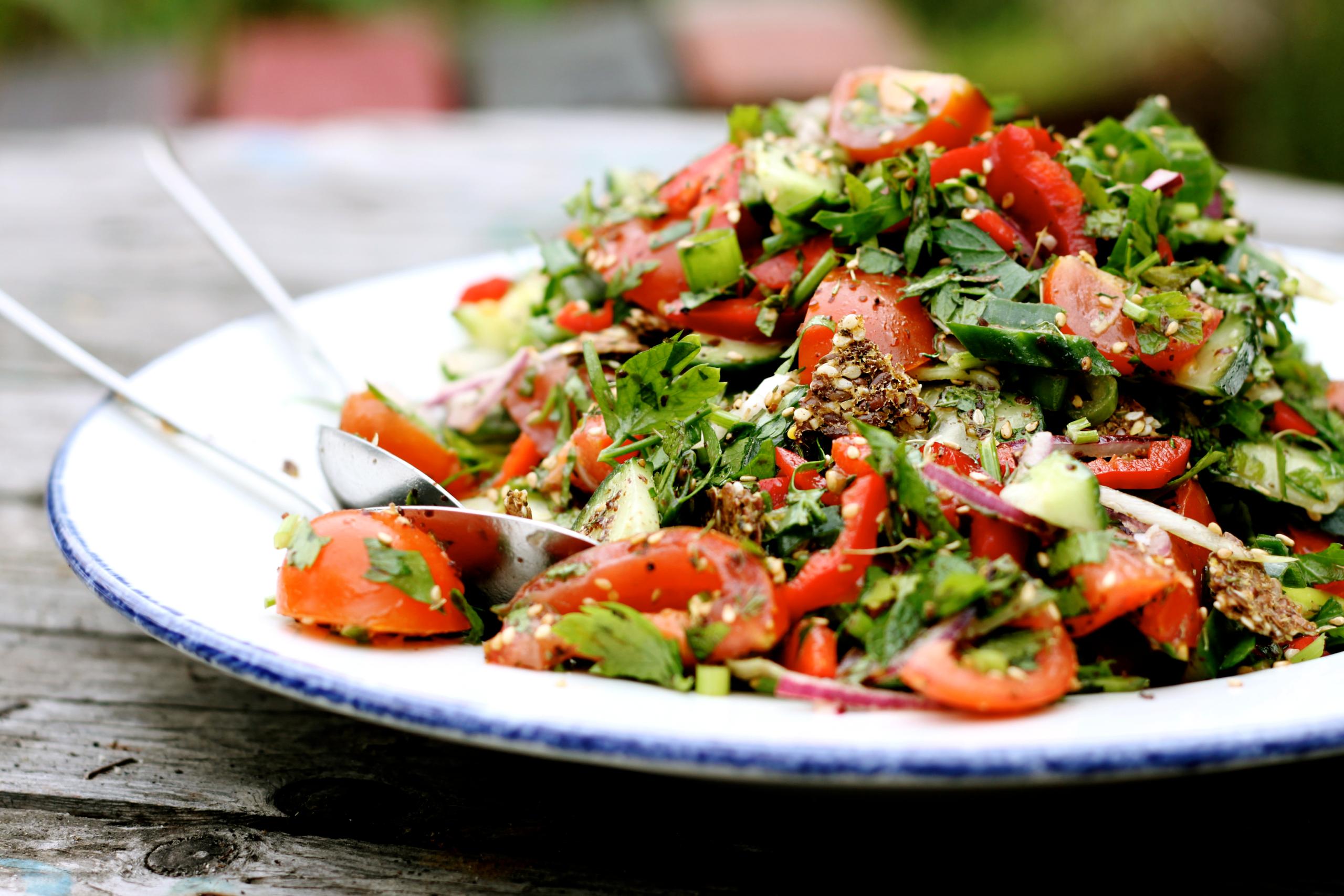
Za'atar fattoush with crispy pita chips, sumac dressing, and fresh herbs — a Lebanese classic.
Nutrition (per serving)
220
Calories
5g
Protein
28g
Carbs
10g
Fat
4g
Fiber
Ingredients
For the pita chips:
For the dressing:
For the salad:
Method
-
Make the pita chips by tossing torn pita pieces with olive oil and za'atar on a rimmed sheet pan. Bake at 375°F for 8 minutes until golden and crispy. The za'atar toasts in the oven, intensifying its herby, sesame flavor. Let cool — they crisp further as they cool.
-
Make the dressing by whisking lemon juice, sumac, minced garlic, olive oil, and salt together. The sumac should be prominent — it provides a fruity acidity that's unique to Middle Eastern cooking and can't be replicated with lemon alone. Let the dressing sit for 5 minutes so the sumac hydrates and releases its flavor.
-
Combine the romaine, tomatoes, cucumber, radishes, parsley, and mint in a large bowl. The radishes add a peppery crunch that's traditional in fattoush and provides a textural contrast to the soft tomatoes.
-
Pour the dressing over the vegetables and toss to coat evenly. Add the za'atar pita chips and toss once more — gently, so the chips don't break into crumbs. Serve immediately while the pita is still crispy.
Equipment
- Rimmed sheet pan Recommended: Nordic Ware Natural Aluminum Half Sheet Pan
- Large mixing bowl Recommended: Vollrath 13-Quart Stainless Steel Mixing Bowl
- Small bowl for dressing
Chef Notes
- The most important thing: Add the pita chips just before serving. They should be crispy when they hit the salad — soggy pita chips defeat the purpose. The contrast between crunchy za'atar pita and fresh, dressed vegetables is what makes fattoush special.
- Sumac is the defining spice of fattoush. It provides a fruity, citrusy tartness that's completely different from lemon. If you don't have sumac, add extra lemon juice, but the flavor won't be the same.
- Za'atar on the pita chips adds an herby, sesame-forward flavor that's distinctly Middle Eastern. It's a blend of dried thyme, sesame seeds, and sumac.
- This is a Lebanese salad, not a Greek one. The pita, sumac, and za'atar are what distinguish it.
- Use the freshest herbs you can find. Parsley and mint should be bright green and aromatic.
Common Substitutions
| Ingredient | Substitution | Notes |
|---|---|---|
| Bread | Gluten-free bread or lettuce wraps | GF bread varies by brand. Lettuce wraps for low-carb. |
| Olive oil | Avocado oil or grapeseed oil | Avocado oil has higher smoke point. Grapeseed is neutral. |
| Lemon juice | Lime juice or white wine vinegar | Lime is slightly sweeter. Vinegar for pure acidity. |
| Fresh garlic | Garlic powder (¼ tsp per clove) | Fresh is always better but powder works in a pinch. |
What You're Practicing
Fattoush teaches you about Middle Eastern spice pantry essentials — sumac and za'atar. Sumac is a ground berry that provides fruity acidity without liquid, making it invaluable for seasoning salads, grilled meats, and hummus. Za'atar is a blend that appears across Lebanese, Palestinian, and Syrian cooking. Understanding these two ingredients opens up an entire cuisine. Visit Spice Blends for more on Middle Eastern seasonings.
Using stale or toasted bread in salads connects fattoush to Italian panzanella and Spanish migas — different cultures solving the same problem of using day-old bread creatively. Visit Vinaigrettes for more on lemon-based dressings.
Some equipment and ingredient links are affiliate links. We earn a small commission at no extra cost to you. Learn more
Comments (0)
Sign in to commentNo comments yet. Be the first to share your thoughts.
Frequently Asked Questions
- Can I make Za'atar Fattoush ahead of time?
- Prep the components separately and assemble just before serving. Dressed salads wilt within an hour.
- How do I store leftover Za'atar Fattoush?
- Store undressed components separately in the refrigerator for up to 2 days. Dress just before serving to keep greens crisp.
- Can I freeze Za'atar Fattoush?
- Salads with fresh greens do not freeze well. However, protein components and cooked grains can be frozen separately and assembled fresh.
- How many servings does this recipe make?
- This recipe serves 4. You can scale the ingredients up or down proportionally — use the Meal Plan servings slider to adjust the grocery list automatically.
- Is Za'atar Fattoush a quick recipe?
- Yes — this recipe is ready in 15 minutes including prep time, making it perfect for busy weeknights.
- Is Za'atar Fattoush dairy free and vegan?
- Yes — this recipe is dairy free and vegan. Check the Common Substitutions section for additional dietary adaptations.
- Is this an authentic Lebanese recipe?
- This recipe follows traditional Lebanese techniques and ingredients. The Chef Notes section explains any adaptations for home kitchen accessibility and suggests authentic alternatives where substitutions are made.
- What substitutions can I make for Za'atar Fattoush?
- See the Common Substitutions section above for ingredient and equipment swaps with specific trade-off notes for each alternative.
You Might Also Like

Classic Greek Salad (Horiatiki)
Classic Greek horiatiki salad with tomatoes, cucumber, olives, and a feta slab — no lettuce.

Arugula Salad with Parmesan and Lemon
Arugula salad with shaved Parmesan, lemon, and olive oil — Italian simplicity at its finest.

Classic Caesar Salad
Classic Caesar salad with homemade anchovy dressing, crispy garlic croutons, and Parmesan shavings.

Broccoli Salad with Bacon
Broccoli salad with crispy bacon, dried cranberries, sunflower seeds, and a creamy sweet-tangy dressing.