sides · Soup
Kimchi Consommé
The culmination — fermentation, curing, sous vide, consommé, and the creative freedom to compose your own dishes.

Nutrition (per serving)
280
Calories
8g
Protein
32g
Carbs
14g
Fat
4g
Fiber
Ingredients
Consommé
Garnish
Method
-
Build the raft (clarification mixture): In a bowl, combine ground chicken, egg whites, grated carrot, onion, scallions, ginger, and 1/2 cup of the kimchi (chopped fine). Mix well.
-
Combine: Stir the raft mixture into cold stock in a tall, narrow pot. Add remaining kimchi and its liquid, soy sauce, and rice vinegar.
-
Clarify: Place over medium heat. Stir gently and frequently as it heats — this prevents the raft from scorching on the bottom. As it approaches a simmer, stop stirring. The egg whites and ground chicken will coagulate and rise, forming a "raft" that traps impurities.
-
Simmer: Once the raft forms and a small hole appears (the "chimney"), reduce heat to bare simmer. Cook 45 min–1 hour. The stock beneath the raft should become crystal clear while absorbing kimchi flavor.
-
Strain: Carefully ladle consommé through the chimney hole, through a cheesecloth-lined sieve. Do not press the raft. The result should be perfectly clear with a deep amber-gold color.
-
Season: Adjust with soy sauce and rice vinegar. It should taste clean, deeply savory, and subtly funky from the kimchi.
-
Serve: Ladle into warm bowls. Garnish with scallion, daikon julienne, sesame seeds, a drop of sesame oil, and microgreens.
Equipment
- Fine-mesh strainer Recommended: Winco 8-Inch Stainless Steel Fine Mesh Strainer
- Cutting board Recommended: John Boos Maple Edge-Grain Cutting Board 18x12
- Mixing bowls Recommended: Vollrath Stainless Steel Mixing Bowls Set
Chef Notes
- The most important thing: 165°F internal for breast, 175°F for thighs. Thighs are more forgiving — they stay juicy even slightly overcooked.
- The liquid should barely simmer — small bubbles around the edges, not a rolling boil. Aggressive boiling toughens delicate proteins.
- The hands-on time is much shorter than the total time. Most of the 2+ hours is unattended cooking — use that time for sides or cleanup.
- This recipe improves overnight as the flavors meld. Make it a day ahead if you can — it's even better reheated.
- Taste as you go and adjust seasoning at the end. Salt levels change as liquids reduce and flavors concentrate.
Common Substitutions
| Ingredient | Substitution | Notes |
|---|---|---|
| Chicken | Turkey or firm tofu | Turkey is closest. Tofu for plant-based — press and season well. |
| Ground meat | Ground turkey or plant-based ground | Turkey is leaner. Plant-based for vegetarian. |
| Rice | Cauliflower rice or quinoa | Cauliflower for low-carb. Quinoa for more protein. |
| Soy sauce | Tamari or coconut aminos | Tamari is gluten-free. Coconut aminos are lower sodium. |
| Kimchi | Sauerkraut + gochugaru | Sauerkraut has similar tang. Add gochugaru for heat. |
What You're Learning
- Consommé clarification: one of the most technically demanding classical techniques
- The raft acts as a filter — egg whites coagulate around impurities
- Fermented ingredients (kimchi) add complexity that would take days to develop otherwise
- This dish bridges classical French technique (consommé) with Korean flavors — the kind of creative fusion that defines modern cuisine
- Presentation: crystal-clear broth is the visual statement; garnishes should be minimal and precise
Foundations Referenced
- → Chicken Stock
- → Dashi (optional, for added depth)
What You're Practicing
Fermentation harnesses beneficial microorganisms to transform ingredients — creating complex flavors, preserving food, and building probiotic cultures. The same principles apply to kimchi, sourdough, yogurt, and beer. Visit Brines, Cures & Marinades for more on fermentation.
Every recipe you cook builds muscle memory and sensory awareness — knowing what a proper sear sounds like, what a finished sauce looks like, how a done protein feels. These instincts develop through repetition and attention, and they transfer across every dish and cuisine you'll encounter.
Some equipment and ingredient links are affiliate links. We earn a small commission at no extra cost to you. Learn more
Comments (0)
Sign in to commentNo comments yet. Be the first to share your thoughts.
Frequently Asked Questions
- Can I make Kimchi Consommé ahead of time?
- Yes. overnight as the flavors meld.
- How do I store leftover Kimchi Consommé?
- Store in an airtight container in the refrigerator for 3-4 days. Most sides reheat well in the oven at 350°F for 10-15 minutes.
- Can I freeze Kimchi Consommé?
- Most cooked sides freeze well for 2-3 months. Soups and stews freeze especially well. Avoid freezing dishes with high dairy content — they can separate when thawed.
- How many servings does this recipe make?
- This recipe serves 4. You can scale the ingredients up or down proportionally — use the Meal Plan servings slider to adjust the grocery list automatically.
- Why does Kimchi Consommé take so long?
- This recipe takes 2 hours because low-and-slow cooking breaks down tough connective tissue into tender, flavorful gelatin. The hands-on time is much shorter — most of the cook time is unattended.
- Is Kimchi Consommé dairy free?
- Yes — this recipe is dairy free. Check the Common Substitutions section for additional dietary adaptations.
- Is this an authentic Korean recipe?
- This recipe follows traditional Korean techniques and ingredients. The Chef Notes section explains any adaptations for home kitchen accessibility and suggests authentic alternatives where substitutions are made.
- What substitutions can I make for Kimchi Consommé?
- See the Common Substitutions section above for ingredient and equipment swaps with specific trade-off notes for each alternative.
You Might Also Like

Baba Ganoush
Baba ganoush with charred eggplant and tahini — smoky, creamy, and deeply savory.
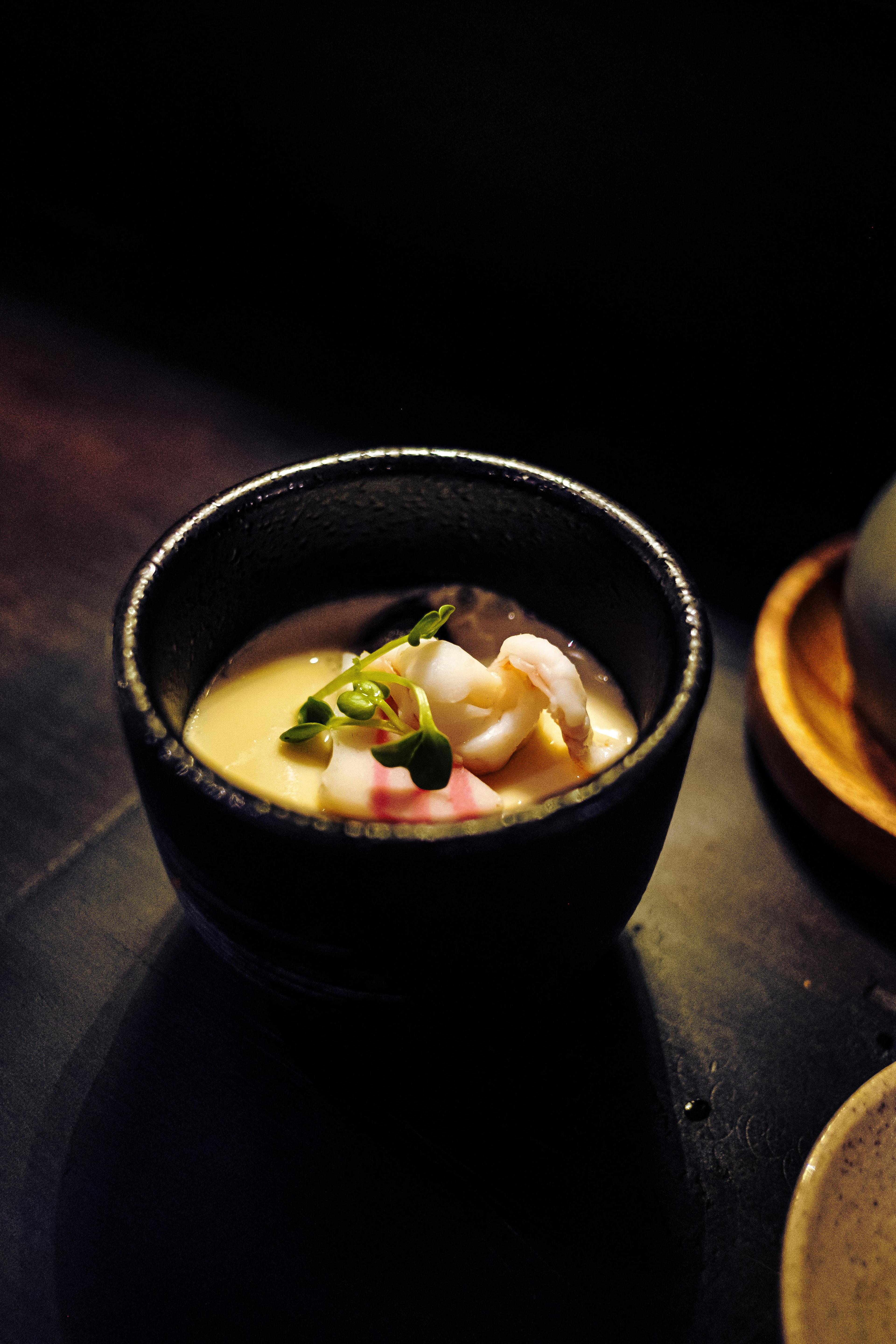
Chawanmushi (Japanese Savory Egg Custard)
Chawanmushi — a silky Japanese steamed egg custard with shrimp, chicken, and mushroom hidden inside.

Baked Sweet Potato Fries
Baked sweet potato fries with a cornstarch coating for crispy edges and sriracha mayo for dipping.

Braised Collard Greens
Braised collard greens slow-simmered with bacon, vinegar, and chicken stock until silky tender.