mains · chicken
Sancocho Panameño (Panamanian Chicken Soup)
Panama's national soup — chicken simmered with ñame, yuca, corn, and culantro in a clear, fragrant broth.

Nutrition (per serving)
380
Calories
28g
Protein
38g
Carbs
12g
Fat
5g
Fiber
Ingredients
For serving:
Method
-
Build the broth by combining chicken, water, onion, garlic, oregano, salt, and pepper in a stockpot. Bring to a boil, skim foam, then reduce to a gentle simmer. Cook 30 minutes.
Salt early and throughout the cooking process. Salt added at the beginning penetrates the food; salt added at the end sits on the surface. Both are important, but the foundation matters most.
Salt early and throughout the cooking process. Salt added at the beginning penetrates the food; salt added at the end sits on the surface. Both are important, but the foundation matters most.
Salt early and throughout the cooking process. Salt added at the beginning penetrates the food; salt added at the end sits on the surface. Both are important, but the foundation matters most.
-
Add the root vegetables — ñame/yuca and corn. Simmer 20-25 minutes until the vegetables are tender and the broth has thickened slightly from the starch.
A simmer means small bubbles gently breaking the surface — not a rolling boil. Aggressive boiling toughens proteins and causes sauces to reduce too quickly, concentrating flavors unevenly.
A simmer means small bubbles gently breaking the surface — not a rolling boil. Aggressive boiling toughens proteins and causes sauces to reduce too quickly, concentrating flavors unevenly.
A simmer means small bubbles gently breaking the surface — not a rolling boil. Aggressive boiling toughens proteins and causes sauces to reduce too quickly, concentrating flavors unevenly.
-
Add culantro in the last 5 minutes. The herb should wilt into the broth, perfuming it.
-
Serve in deep bowls with white rice on the side. In Panama, sancocho is the cure for everything — hangovers, colds, heartbreak, and Sunday laziness.
Serve immediately while the textures and temperatures are at their peak. Most dishes begin declining the moment they leave the heat — crispy things soften, sauces thicken, and aromatics fade.
Serve immediately while the textures and temperatures are at their peak. Most dishes begin declining the moment they leave the heat — crispy things soften, sauces thicken, and aromatics fade.
Serve immediately while the textures and temperatures are at their peak. Most dishes begin declining the moment they leave the heat — crispy things soften, sauces thicken, and aromatics fade.
Equipment
- Stockpot Recommended: Tramontina 12-Quart Stainless Steel Stock Pot
- Ladle Recommended: OXO Good Grips Stainless Steel Ladle
Chef Notes
- The most important thing: Culantro (not cilantro) is the herb that defines Panamanian sancocho. It has a stronger, more pungent flavor. Find it at Latin or Caribbean grocery stores. Cilantro works as a substitute but the flavor is milder.
- Use bone-in chicken — the bones create a rich, gelatinous broth that's the soul of sancocho.
- Ñame (a starchy root vegetable) thickens the broth naturally as it cooks. Yuca is the most common substitute.
- Simmer gently — don't boil. A gentle simmer keeps the broth clear.
Common Substitutions
| Ingredient | Substitution | Notes |
|---|---|---|
| Culantro | Cilantro (use double the amount) | Milder — add at the end |
| Ñame | Yuca or potato | Yuca is closest; potato dissolves more |
| Bone-in chicken | Rotisserie chicken (add at end) | Less rich broth — use store-bought broth |
What You're Practicing
Sancocho teaches you the Latin American approach to soup-making — building a clear broth from bone-in protein and thickening it naturally with starchy root vegetables. The same technique drives Colombian sancocho, Dominican sancocho, and Puerto Rican asopao. Visit Stocks for more.
Video Resources
Some equipment and ingredient links are affiliate links. We earn a small commission at no extra cost to you. Learn more
Comments (0)
Sign in to commentNo comments yet. Be the first to share your thoughts.
Frequently Asked Questions
- Can I make Sancocho Panameño (Panamanian Chicken Soup) ahead of time?
- Yes — prep the components up to a day ahead and store covered in the refrigerator. Reheat gently or bring to room temperature before serving.
- How do I store leftover Sancocho Panameño (Panamanian Chicken Soup)?
- Store in an airtight container in the refrigerator for 3-4 days. Reheat gently over medium-low heat, adding a splash of broth or water to prevent drying out.
- Can I freeze Sancocho Panameño (Panamanian Chicken Soup)?
- Yes — most cooked mains freeze well for up to 3 months. Cool completely, store in freezer-safe containers, and thaw overnight in the refrigerator before reheating.
- How many servings does this recipe make?
- This recipe serves 6. You can scale the ingredients up or down proportionally — use the Meal Plan servings slider to adjust the grocery list automatically.
- Is Sancocho Panameño (Panamanian Chicken Soup) dairy free and gluten free and high protein?
- Yes — this recipe is dairy free and gluten free and high protein. Check the Common Substitutions section for additional dietary adaptations.
- What substitutions can I make for Sancocho Panameño (Panamanian Chicken Soup)?
- See the Common Substitutions section above for ingredient and equipment swaps with specific trade-off notes for each alternative.
You Might Also Like
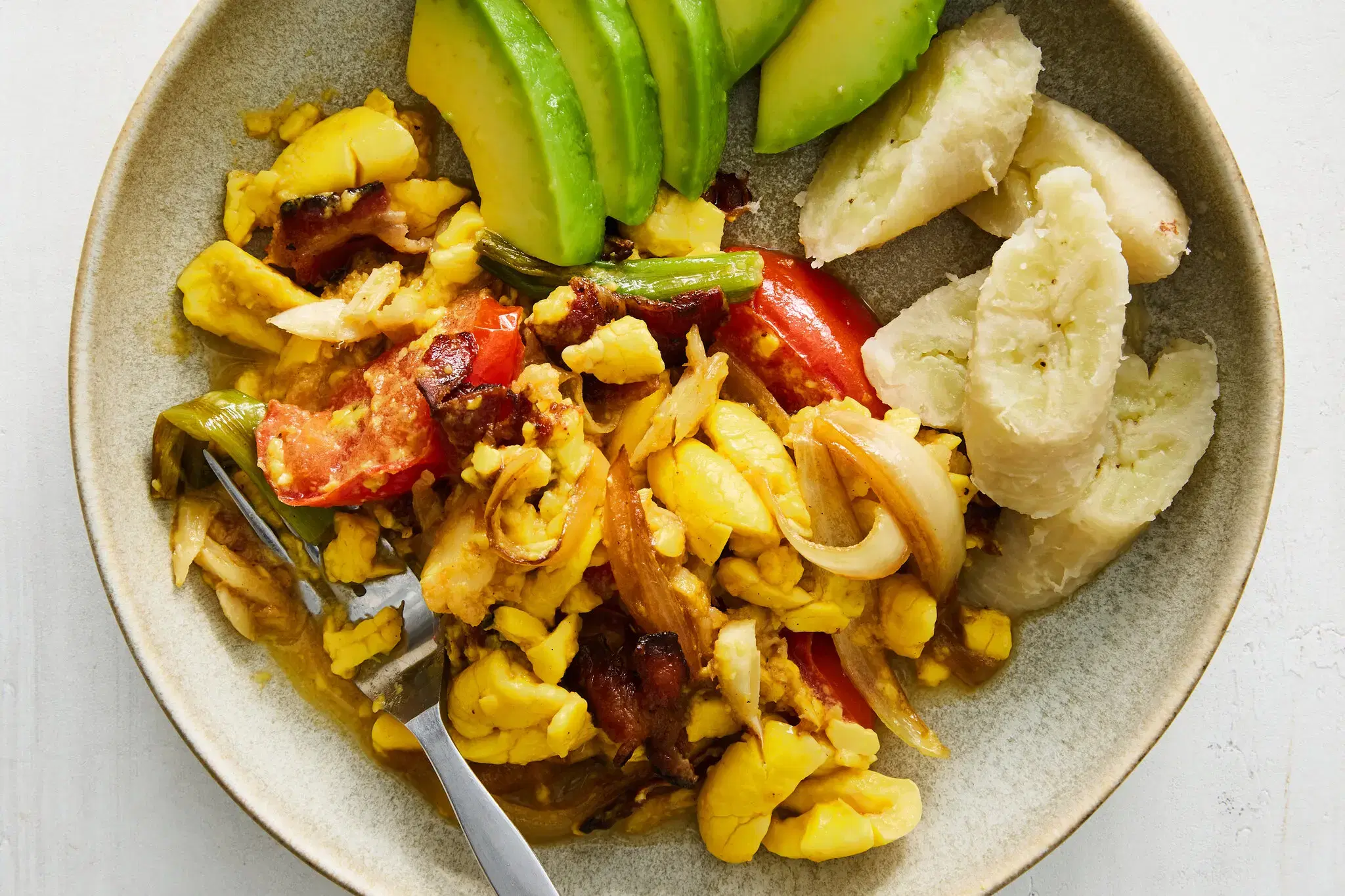
Ackee and Saltfish
Jamaica''s national dish — creamy ackee fruit sautéed with salted cod.

Asian Chicken Lettuce Wraps
Asian chicken lettuce wraps with savory ground chicken, water chestnuts, and hoisin in butter lettuce.

Bacalhau à Brás (Portuguese Salt Cod)
Shredded salt cod with crispy potatoes, scrambled eggs, and olives — Portugal's beloved comfort dish.

Baked Cod with Lemon and Dill
Baked cod with lemon, garlic, and fresh dill — light, flaky, and ready in 20 minutes.