foundations
Essential Kitchen Equipment
The essential kitchen equipment guide — knives, cookware, thermometers, and tools that make every recipe in this curriculum possible.
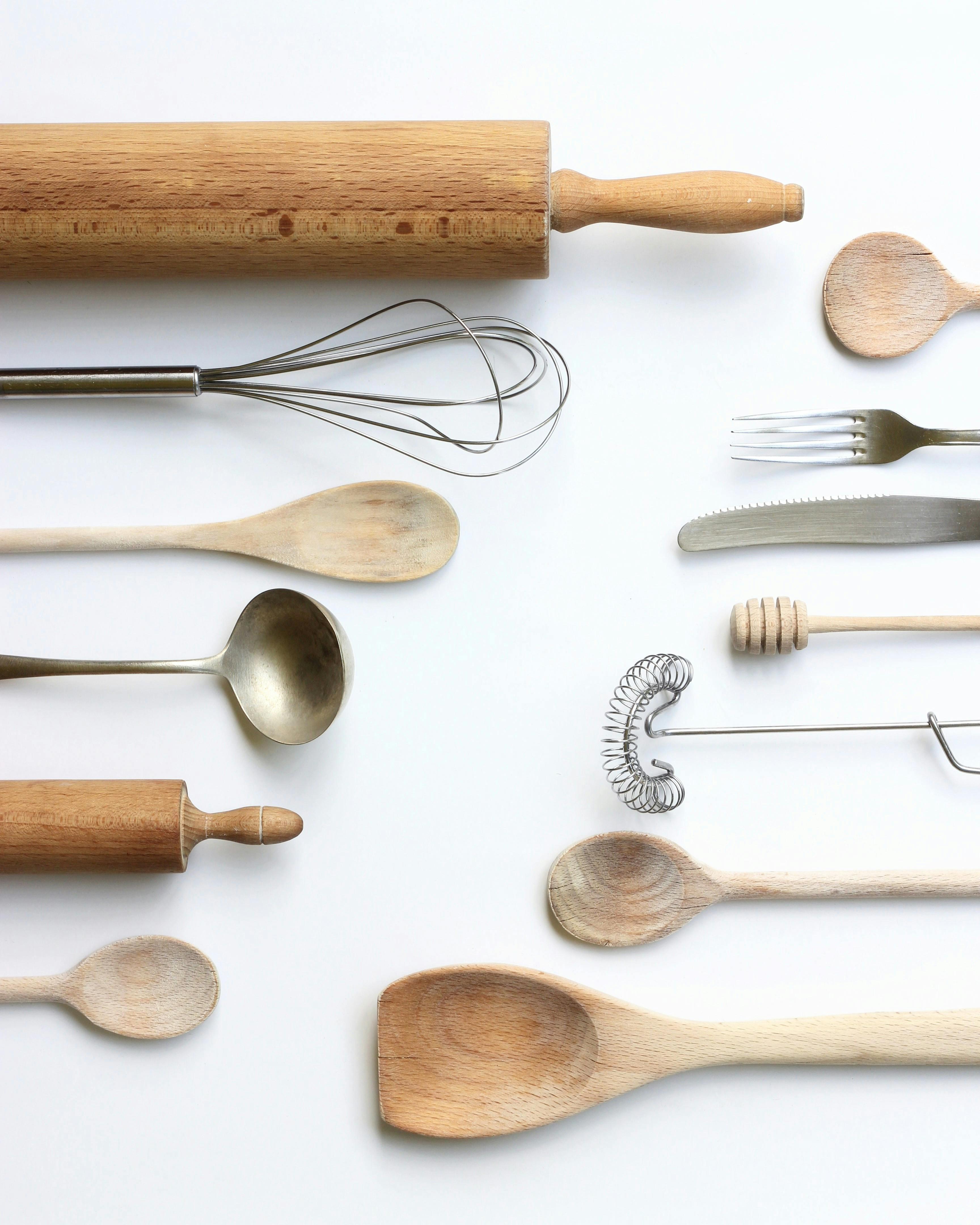
The Tools That Matter
You don't need a kitchen full of gadgets to cook well. Professional kitchens run on a surprisingly short list of equipment — the same tools, used daily, for everything from prep to plating. This guide covers the essentials that appear across every chapter and recipe in this curriculum, organized by how often you'll reach for them.
Every item below has been chosen because it directly affects the quality of your cooking. A dull knife is dangerous and slow. A thin pan burns food. A missing thermometer means guessing. These aren't luxuries — they're the foundation that makes technique possible.
Knives — The Non-Negotiables
A good knife is the single most important tool in your kitchen. It's used in every recipe, every day, for every task from mincing garlic to breaking down a chicken. You need three knives. Everything else is optional.
Chef's Knife (8-inch)
This is your primary tool. An 8-inch chef's knife handles 90% of all cutting tasks — chopping vegetables, slicing proteins, mincing herbs, and crushing garlic. It's the knife you'll reach for first and put down last.
What to look for: a blade that feels balanced in your hand (not blade-heavy or handle-heavy), a full tang (the metal extends through the handle), and high-carbon stainless steel that holds an edge but doesn't rust. You don't need to spend more than $40 — culinary students and professional prep cooks use the same affordable knives every day.
Used in: every recipe in this curriculum. Start with Techniques for knife skills fundamentals.
Paring Knife (3.5-inch)
For tasks too small or precise for a chef's knife — peeling fruit, deveining shrimp, trimming silver skin, or scoring bread dough. A paring knife should feel like an extension of your fingers. Expect to replace it yearly if you use it hard — they're inexpensive enough that sharpness matters more than longevity.
Serrated Bread Knife (10-inch)
The only knife that doesn't need sharpening — the serrated teeth grip and saw through crusty bread, ripe tomatoes, and delicate pastries without crushing them. Essential for Rustic Bread and any baking in Pastry Foundations.
Knife Maintenance
A dull knife is more dangerous than a sharp one — it requires more force, which means less control. Sharpen your chef's knife every 2-3 months on a whetstone and hone it on a steel before every use. The 1000/6000 grit combination stone is the standard — the 1000 grit side sharpens, the 6000 grit side polishes. Pair it with a honing steel for daily maintenance between sharpenings.
Cookware — Heat Is Everything
The pans you cook in determine how heat reaches your food. Thin, cheap pans create hot spots that burn. Heavy pans distribute heat evenly and hold temperature when cold food hits the surface. You need four pieces to cover every technique in this curriculum.
Cast Iron Skillet (12-inch)
The most versatile pan in existence. Sear steaks, fry chicken, bake cornbread, and char vegetables. Cast iron holds heat like nothing else and develops a natural nonstick surface over time. It goes from stovetop to oven without a second thought. A well-seasoned cast iron skillet will outlast every other pan in your kitchen.
The 12-inch size is non-negotiable — anything smaller crowds food and steams instead of searing. Pre-seasoned skillets are ready to use out of the box. Season it further by cooking fatty foods (bacon, sausage) for the first few weeks.
Used in: Blackened Tilapia, Chicken and Waffles, Steak au Poivre, and dozens more.
Stainless Steel Skillet (12-inch, tri-ply)
For pan sauces, searing fish, and any time you need fond — the browned bits on the bottom of the pan that become the base of a sauce. Stainless steel doesn't react with acidic ingredients like tomatoes or wine, making it essential for Pan & Daughter Sauces.
Look for tri-ply or fully clad construction: an aluminum core sandwiched between stainless steel layers. This gives you the even heating of aluminum with the durability and reactivity-resistance of stainless steel.
Dutch Oven (5.5-6 quart, enameled cast iron)
The braising vessel. Essential for pot roasts, stews, soups, and bread baking. The heavy lid traps moisture, and the thick walls distribute heat evenly from stovetop to oven. Enameled cast iron doesn't need seasoning and won't react with acidic foods like tomatoes or wine.
This is the one piece of cookware worth investing in. A good Dutch oven lasts a lifetime — literally. The difference between a $60 and $300 Dutch oven is mostly aesthetics and warranty, not performance.
Used in: Beef Bourguignon, Pulled Pork, Lamb Shanks, and all braising recipes.
Large Stockpot (8-12 quart)
For making Stocks, boiling pasta, blanching vegetables, and any large-batch cooking. Doesn't need to be expensive — you're mostly boiling water. A tri-ply bottom helps for stock-making where you want even, gentle heat.
Thermometers — Stop Guessing
An instant-read thermometer is the single cheapest tool that will most dramatically improve your cooking. It removes guesswork from proteins, bread, candy, oil temperature, and fermentation. If you cook without one, you're gambling every time.
Instant-Read Thermometer
Reads the internal temperature of food in 2-3 seconds. Use it for every protein — chicken is safe at 165°F, steak is medium-rare at 130°F, bread is done at 190-200°F. The difference between a perfectly cooked and an overcooked piece of meat is often just 5°F. Your finger can't tell you that.
Used in: every protein recipe in this curriculum, plus bread baking and candy making.
Leave-In Probe Thermometer
For long cooks where you need to monitor temperature without opening the oven or smoker — brisket, pulled pork, roasts, and bread. Set your target temperature, insert the probe, and walk away. It alerts you when you hit the mark.
Prep Tools — Speed and Precision
Cutting Boards
You need at least two: one large wood board for general prep and one plastic board for raw proteins (dishwasher-safe for sanitation). Maple is the professional standard — hard enough to resist deep cuts but gentle on knife edges. Edge-grain construction is durable and won't warp.
Mixing Bowls (Stainless Steel, Nested Set)
Stainless steel bowls are lightweight, unbreakable, and don't retain odors or stains. A nested set of 3-5 sizes covers everything from whisking vinaigrettes to marinating proteins to tossing salads. The same bowls used in restaurant kitchens are available for under $20.
Kitchen Scale
Baking by weight is more accurate than measuring by volume — a cup of flour can vary by 30% depending on how you scoop it. A scale is essential for Pastry Foundations, bread baking, and any recipe where precision matters. Look for accuracy to 1 gram and a tare function.
Fine-Mesh Strainer
For straining Stocks, sifting flour, draining pasta, and catching seeds when juicing citrus. A workhorse that gets used daily in any serious kitchen.
Specialty Equipment
These tools aren't needed for every recipe, but they're essential for specific techniques covered in the curriculum.
Grill (Charcoal or Gas)
Essential for Chapter 12 and all grilling recipes. Charcoal gives you more flavor control and higher heat; gas gives you convenience and consistent temperature. A basic 22-inch kettle grill handles two-zone cooking, smoking, and direct grilling — it's the most versatile option for the money.
Used in: Grilled Steak, Beer Can Chicken, Cedar Plank Salmon, Smoked Ribs.
Stand Mixer
For bread doughs, pastry, and any recipe that requires sustained mixing. The motor does the kneading so you don't have to — essential for enriched doughs like brioche where 10+ minutes of mixing is required. A tilt-head design with a 5-quart bowl covers everything from cookies to bread.
Immersion Blender
For pureeing soups directly in the pot, making smooth sauces, and blending smoothies. Faster and easier to clean than a countertop blender for most tasks. Variable speed gives you control over texture — from chunky to silky smooth.
Fermentation Bottles (Swing-Top)
For kombucha second fermentation and any carbonated brewing. Pressure-rated glass with a reliable seal is essential — regular mason jars can't handle carbonation pressure safely.
Wire Cooling Rack (Half-Sheet Size)
For resting fried foods (keeps them crispy instead of steaming on paper towels), cooling baked goods, and as an oven rack insert for roasting. Get one that fits inside a standard half-sheet pan.
What You Don't Need (Yet)
Resist the urge to buy everything at once. These tools are useful but not essential until you're deep into specific techniques:
- Sous vide circulator — Only needed for Sous Vide Chicken Breast. Buy when you're ready for Chapter 8.
- Mandoline — Useful for uniform thin slicing, but a sharp knife does the same job. Buy when speed matters.
- Pasta machine — Only for Fresh Pasta with Ragù. A rolling pin works for occasional pasta making.
- Smoker — A Weber Kettle with wood chunks handles smoking for most recipes. A dedicated smoker is a Chapter 12 upgrade.
- Torch — For crème brûlée and finishing. A broiler works in the meantime.
Comments (0)
Sign in to commentNo comments yet. Be the first to share your thoughts.