mains · fish
Coconut Fish Curry
Coconut fish curry with flaky cod simmered in a fragrant coconut-tomato sauce with lime and cilantro.

Nutrition (per serving)
340
Calories
30g
Protein
18g
Carbs
16g
Fat
3g
Fiber
Ingredients
For the curry base:
For the fish:
For finishing:
Method
-
Build the aromatic base by heating oil in a large skillet over medium heat. Add the diced onion and cook for 4 minutes until softened and translucent. Add garlic and ginger, stirring for 1 minute until fragrant. The onion provides sweetness, the garlic provides depth, and the ginger provides warmth — this trio is the foundation of most South and Southeast Asian curries.
-
Add the curry powder and stir constantly for 60 seconds. This is blooming — toasting the ground spices in the hot oil activates their essential oils and deepens the flavor. You'll smell the spices transform from raw and dusty to warm and aromatic. The oil carries the fat-soluble flavor compounds throughout the sauce.
-
Pour in the coconut milk and diced tomatoes. Stir to combine, scraping up any spices stuck to the bottom. Bring to a gentle simmer and cook for 10 minutes, stirring occasionally. The sauce should thicken slightly as the coconut milk reduces and the tomatoes break down. This simmering time allows the flavors to meld into a cohesive, complex sauce.
-
Season the cod pieces with salt and gently nestle them into the simmering sauce. Don't stir — just push them down so they're mostly submerged. Cover and simmer on low for 5–7 minutes until the fish is opaque and flakes easily. The gentle poaching heat cooks the fish evenly without breaking it apart.
-
Add fish sauce and lime juice. Stir gently around (not through) the fish pieces. The fish sauce adds a savory umami backbone, and the lime juice brightens the entire dish with acidity. Taste and adjust — the curry should be rich, slightly sweet from the coconut, tangy from the tomatoes and lime, and savory from the fish sauce.
-
Serve over steamed basmati rice with fresh cilantro scattered on top. The fragrant, saucy curry over fluffy rice is comfort food at its most satisfying. Spoon extra sauce over the rice — it's the best part.
Equipment
- Large skillet or Dutch oven (12-inch) Recommended: Lodge 6-Quart Enameled Cast Iron Dutch Oven · Also good: Lodge 6-Quart Enameled Cast Iron Dutch Oven
- Wooden spoon Recommended: Riveira Olive Wood Cooking Spoons Set
Chef Notes
- The most important thing: Add the fish at the very end and simmer gently for only 5–7 minutes. Cod and halibut are delicate — they fall apart if overcooked or stirred too aggressively. Nestle the pieces into the sauce and let them poach undisturbed.
- Build the curry base first and let it simmer for 10 minutes before adding fish. The coconut milk and tomatoes need time to meld into a cohesive sauce.
- Fish sauce adds umami depth without making the curry taste fishy. It's the secret ingredient in many Southeast Asian and Indian-inspired curries. Start with 1 tablespoon and adjust.
- Bloom the curry powder in the oil with the aromatics. Dry spices toasted in fat develop deeper, more complex flavor than spices added directly to liquid.
- Full-fat coconut milk is essential. Light coconut milk makes a thin, watery sauce that doesn't coat the fish properly.
Common Substitutions
| Ingredient | Substitution | Notes |
|---|---|---|
| White fish (cod, tilapia, halibut) | Any firm white fish | Avoid delicate fish like sole — it falls apart. |
| Fish sauce | Soy sauce + pinch of sugar | Loses the fermented depth but adds salt and umami. |
| Coconut milk | Coconut cream diluted, or oat milk | Oat milk is thinner — add 1 tbsp oil for richness. |
| Dutch oven | Heavy-bottomed pot with tight lid | Any heavy pot works — the tight lid is essential. |
What You're Practicing
Building a curry from scratch teaches you the layered approach to flavor development: aromatics first (onion, garlic, ginger), then spices bloomed in fat, then liquid components (coconut milk, tomatoes), then protein added at the end. This same structure applies to Indian dal, Thai curries, and Japanese curry. Visit Spice Blends for more on curry spice combinations.
Poaching fish in a flavorful liquid is one of the gentlest cooking methods for delicate proteins. The sauce does double duty — it cooks the fish and becomes the serving sauce. This same technique is used in French bouillabaisse, Brazilian moqueca, and Korean jjigae. Visit Techniques for more on poaching and braising.
Some equipment and ingredient links are affiliate links. We earn a small commission at no extra cost to you. Learn more
Comments (0)
Sign in to commentNo comments yet. Be the first to share your thoughts.
Frequently Asked Questions
- Can I make Coconut Fish Curry ahead of time?
- Yes — prep the components up to a day ahead and store covered in the refrigerator. Reheat gently or bring to room temperature before serving.
- How do I store leftover Coconut Fish Curry?
- Store in an airtight container in the refrigerator for 3-4 days. Reheat gently over medium-low heat, adding a splash of broth or water to prevent drying out.
- Can I freeze Coconut Fish Curry?
- Yes — most cooked mains freeze well for up to 3 months. Cool completely, store in freezer-safe containers, and thaw overnight in the refrigerator before reheating.
- How many servings does this recipe make?
- This recipe serves 4. You can scale the ingredients up or down proportionally — use the Meal Plan servings slider to adjust the grocery list automatically.
- Is Coconut Fish Curry a quick recipe?
- Yes — this recipe is ready in 30 minutes including prep time, making it perfect for busy weeknights.
- Is Coconut Fish Curry gluten free and high protein and keto?
- Yes — this recipe is gluten free and high protein and keto. Check the Common Substitutions section for additional dietary adaptations.
- Is this an authentic Indian recipe?
- This recipe follows traditional Indian techniques and ingredients. The Chef Notes section explains any adaptations for home kitchen accessibility and suggests authentic alternatives where substitutions are made.
- What substitutions can I make for Coconut Fish Curry?
- See the Common Substitutions section above for ingredient and equipment swaps with specific trade-off notes for each alternative.
You Might Also Like
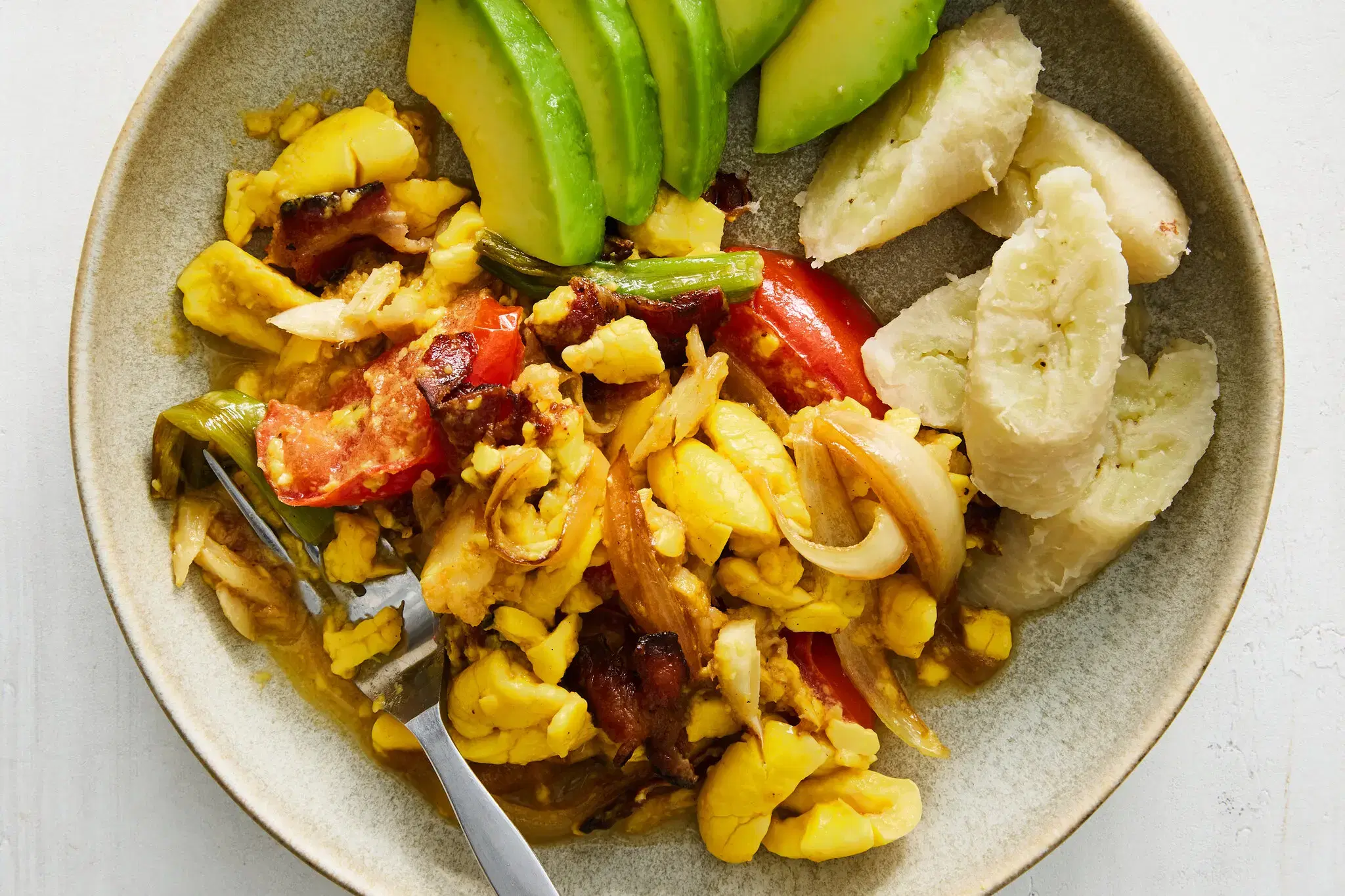
Ackee and Saltfish
Jamaica''s national dish — creamy ackee fruit sautéed with salted cod.

Bacalhau à Brás (Portuguese Salt Cod)
Shredded salt cod with crispy potatoes, scrambled eggs, and olives — Portugal's beloved comfort dish.

Baked Cod with Lemon and Dill
Baked cod with lemon, garlic, and fresh dill — light, flaky, and ready in 20 minutes.
Baja-Style Fish Tacos (Tilapia)
Baja-Style Fish Tacos (Tilapia) — a Mexican main dish Ready in 30 minutes. Perfect for weeknight cooking. Quick and easy.