mains · plant-based
Masala Dosa (South Indian Stuffed Crepe)
Crispy fermented rice-and-lentil crepe filled with spiced potato masala — South India's iconic breakfast.

Nutrition (per serving)
340
Calories
10g
Protein
52g
Carbs
10g
Fat
4g
Fiber
Ingredients
For the dosa batter (make 1 day ahead):
For the potato masala filling:
For serving:
Method
-
Soak the grains by washing the rice and urad dal separately in several changes of water. Soak the rice in one bowl and the urad dal with fenugreek seeds in another, both covered with water by 2 inches. Soak for at least 4 hours, ideally 6. The grains should crush easily between your fingers when ready.
-
Grind the batter by first blending the urad dal with just enough water to get the blades moving. Grind for 3-5 minutes until the batter is completely smooth, fluffy, and white — it should feel airy when you rub it between your fingers. Transfer to a large bowl. Then grind the rice with water to a slightly grainy paste (not as smooth as the dal). Combine both batters, add salt, and mix well. The batter should be the consistency of thick pancake batter.
-
Ferment the batter by covering the bowl loosely and placing it in a warm spot (75-85°F) for 8-12 hours or overnight. The batter should double in volume and smell slightly sour. In cold climates, place the bowl in an oven with just the light on, or near a warm appliance. Fermentation creates the lactic acid that gives dosa its tang and the CO2 that makes it crispy.
-
Make the potato masala by heating oil in a skillet over medium heat. Add mustard seeds and wait for them to pop. Add urad dal and curry leaves — they'll sizzle and crisp. Add onion and cook for 5-6 minutes until golden. Add green chiles, turmeric, and ginger. Cook 1 minute. Add the mashed potatoes, salt, and 2-3 tbsp water. Stir to combine and cook for 3-4 minutes until heated through. Fold in cilantro. The filling should be moist but not wet.
-
Cook the dosas by heating a cast iron griddle over medium-high heat until a drop of water sizzles and evaporates immediately. Wipe with an oiled paper towel. Pour 1/3 cup batter in the center and immediately spread it in a thin, circular motion using the back of the ladle — work from the center outward in concentric circles. The dosa should be thin and even.
-
Drizzle ghee around the edges and over the surface. Cook for 2-3 minutes without flipping until the bottom is golden brown and crispy and the top is set. The edges should lift away from the griddle. A properly cooked dosa is lacy, golden, and shatters when you bite it.
-
Fill and fold by placing 2-3 tbsp of warm potato masala in the center of the dosa. Fold in half or roll into a cone. Serve immediately with coconut chutney and sambar for dipping. In South India, dosa is eaten with your hands — tear off a piece, dip in chutney, and scoop up sambar.
Equipment
- Blender or wet grinder Recommended: Vitamix VX1
- Cast iron skillet or flat griddle (tawa) Also good: Victoria Cast Iron Griddle
- Ladle Recommended: OXO Good Grips Stainless Steel Ladle
- Cast iron skillet Recommended: Lodge 12-Inch Pre-Seasoned Cast Iron Skillet
- Dutch oven Recommended: Lodge 6-Quart Enameled Cast Iron Dutch Oven · Also good: Lodge 6-Quart Enameled Cast Iron Dutch Oven
- Nonstick skillet Recommended: All-Clad HA1 Expert Hard Anodized Nonstick Frying Pan
Chef Notes
- The most important thing: The batter must ferment for 8-12 hours in a warm place. Fermentation is what makes dosa batter rise, develop its characteristic tang, and create the crispy texture when cooked. Without fermentation, you get a flat, dense crepe — not a dosa.
- Soak the rice and urad dal separately for at least 4 hours (ideally 6). The dal needs to be ground to a smooth, fluffy paste — this is what gives the batter its airiness. The rice can be slightly grainy.
- The pan must be very hot, then wiped with oil. Pour the batter and immediately spread it in a thin, circular motion from the center outward. Speed matters — the batter sets quickly on the hot surface.
- A cast iron griddle (tawa) gives the best results. Nonstick works but you won't get the same crispy, golden surface. The iron's heat retention is what creates the signature crackle.
- The potato masala should be warm, not hot, when you fill the dosa. Hot filling makes the dosa soggy.
Common Substitutions
| Ingredient | Substitution | Notes |
|---|---|---|
| Dosa batter (homemade) | Store-bought dosa batter | Available at Indian grocery stores — saves 12+ hours |
| Urad dal | None — essential for fermentation | No true substitute; urad dal is what makes dosa batter rise |
| Curry leaves | Bay leaf (different but adds herbal note) | Nothing replaces curry leaves — freeze extras |
| Cast iron griddle | Large nonstick skillet | Less crispy but works — use medium-high heat |
| Potato masala | Plain dosa (no filling) | Called "sada dosa" — equally traditional, served with extra chutney |
What You're Practicing
Dosa batter fermentation teaches you how microorganisms transform food. The wild yeast and lactobacillus in the batter produce CO2 (for lift) and lactic acid (for tang) — the same process that drives sourdough bread, idli, and Ethiopian injera. Understanding natural fermentation connects you to one of the oldest and most universal food preparation techniques. Visit Techniques for more on fermentation.
The South Indian tempering technique (mustard seeds + urad dal + curry leaves in oil) is the aromatic foundation of Tamil, Kerala, and Karnataka cooking. This tempering is different from North Indian tadka — it uses mustard seeds instead of cumin, and curry leaves instead of dried chiles. Learning both regional tempering styles gives you the ability to cook across all of Indian cuisine.
Video Resources
Some equipment and ingredient links are affiliate links. We earn a small commission at no extra cost to you. Learn more
Comments (0)
Sign in to commentNo comments yet. Be the first to share your thoughts.
Frequently Asked Questions
- Can I make Masala Dosa (South Indian Stuffed Crepe) ahead of time?
- Yes. ahead):** - 1 cup long-grain rice (or dosa rice) - 1/3 cup urad dal (split black gram), skinned - 1/4 tsp fenugreek seeds - Water for soaking and grinding - 1/2 tsp salt **For the potato masala filling:** - 4 medium potatoes, boiled, peeled, and roughly mashed - 2 tbsp vegetable oil - 1 tsp mustard seeds - 1 tsp urad dal (for tempering) - 10 fresh curry leaves - 1 medium onion, finely diced - 2 green chiles, slit - 1/2 tsp turmeric - 1-inch piece ginger, grated - 2 tbsp fresh cilantro, chopped **For serving:** - Coconut chutney - Sambar - Ghee ## Method 1.
- How do I store leftover Masala Dosa (South Indian Stuffed Crepe)?
- Store in an airtight container in the refrigerator for 3-4 days. Reheat gently over medium-low heat, adding a splash of broth or water to prevent drying out.
- Can I freeze Masala Dosa (South Indian Stuffed Crepe)?
- Yes — most cooked mains freeze well for up to 3 months. Cool completely, store in freezer-safe containers, and thaw overnight in the refrigerator before reheating.
- How many servings does this recipe make?
- This recipe serves 4. You can scale the ingredients up or down proportionally — use the Meal Plan servings slider to adjust the grocery list automatically.
- Is Masala Dosa (South Indian Stuffed Crepe) a quick recipe?
- Yes — this recipe is ready in 30 minutes including prep time, making it perfect for busy weeknights.
- Is Masala Dosa (South Indian Stuffed Crepe) gluten free and high protein and plant based and vegetarian?
- Yes — this recipe is gluten free and high protein and plant based and vegetarian. Check the Common Substitutions section for additional dietary adaptations.
- Is this an authentic Indian recipe?
- This recipe follows traditional Indian techniques and ingredients. The Chef Notes section explains any adaptations for home kitchen accessibility and suggests authentic alternatives where substitutions are made.
- What substitutions can I make for Masala Dosa (South Indian Stuffed Crepe)?
- See the Common Substitutions section above for ingredient and equipment swaps with specific trade-off notes for each alternative.
You Might Also Like
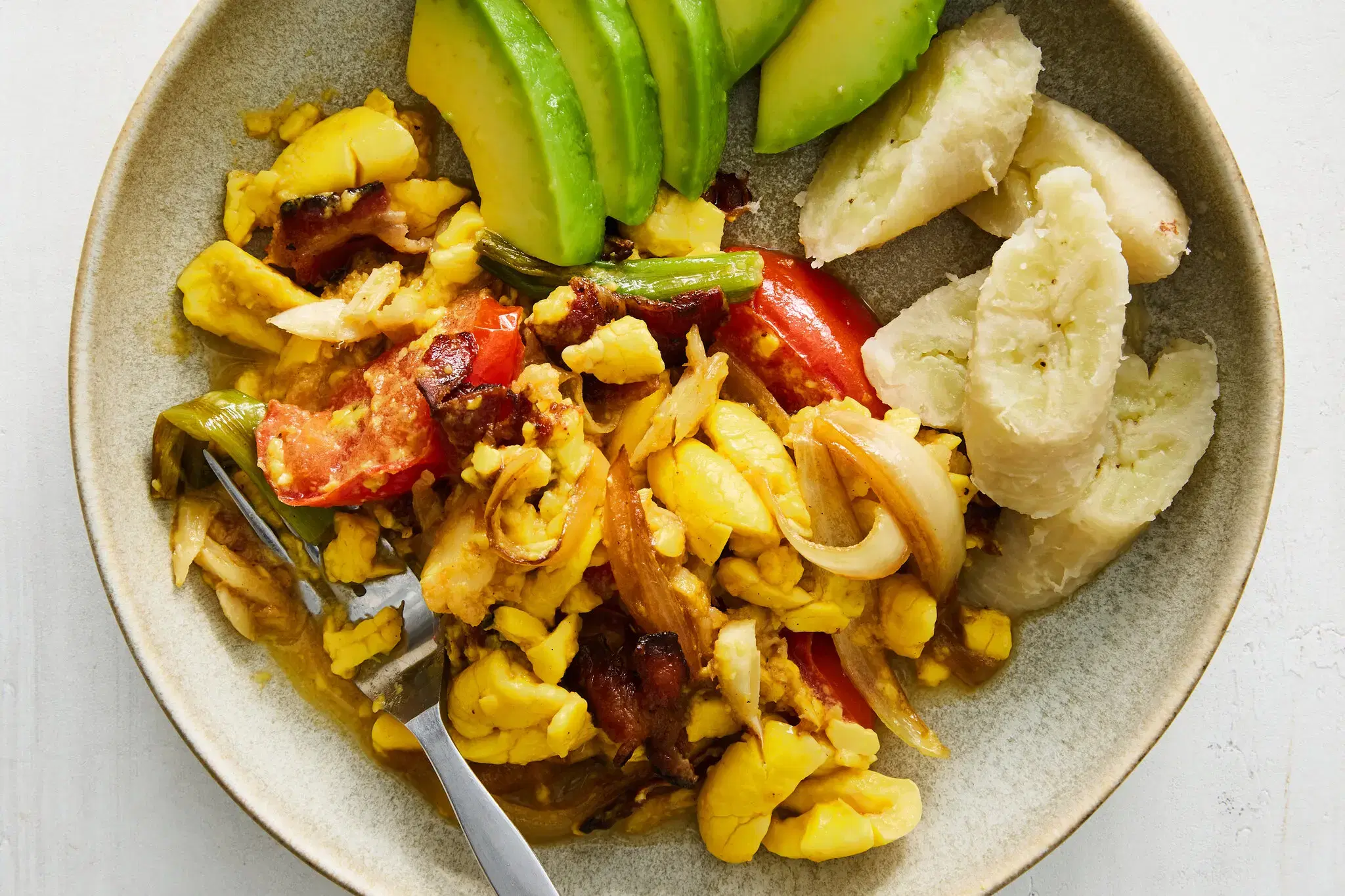
Ackee and Saltfish
Jamaica''s national dish — creamy ackee fruit sautéed with salted cod.

Bacalhau à Brás (Portuguese Salt Cod)
Shredded salt cod with crispy potatoes, scrambled eggs, and olives — Portugal's beloved comfort dish.

Asian Chicken Lettuce Wraps
Asian chicken lettuce wraps with savory ground chicken, water chestnuts, and hoisin in butter lettuce.
Baja-Style Fish Tacos (Tilapia)
Baja-Style Fish Tacos (Tilapia) — a Mexican main dish Ready in 30 minutes. Perfect for weeknight cooking. Quick and easy.